.png?imageMogr2/format/webp)
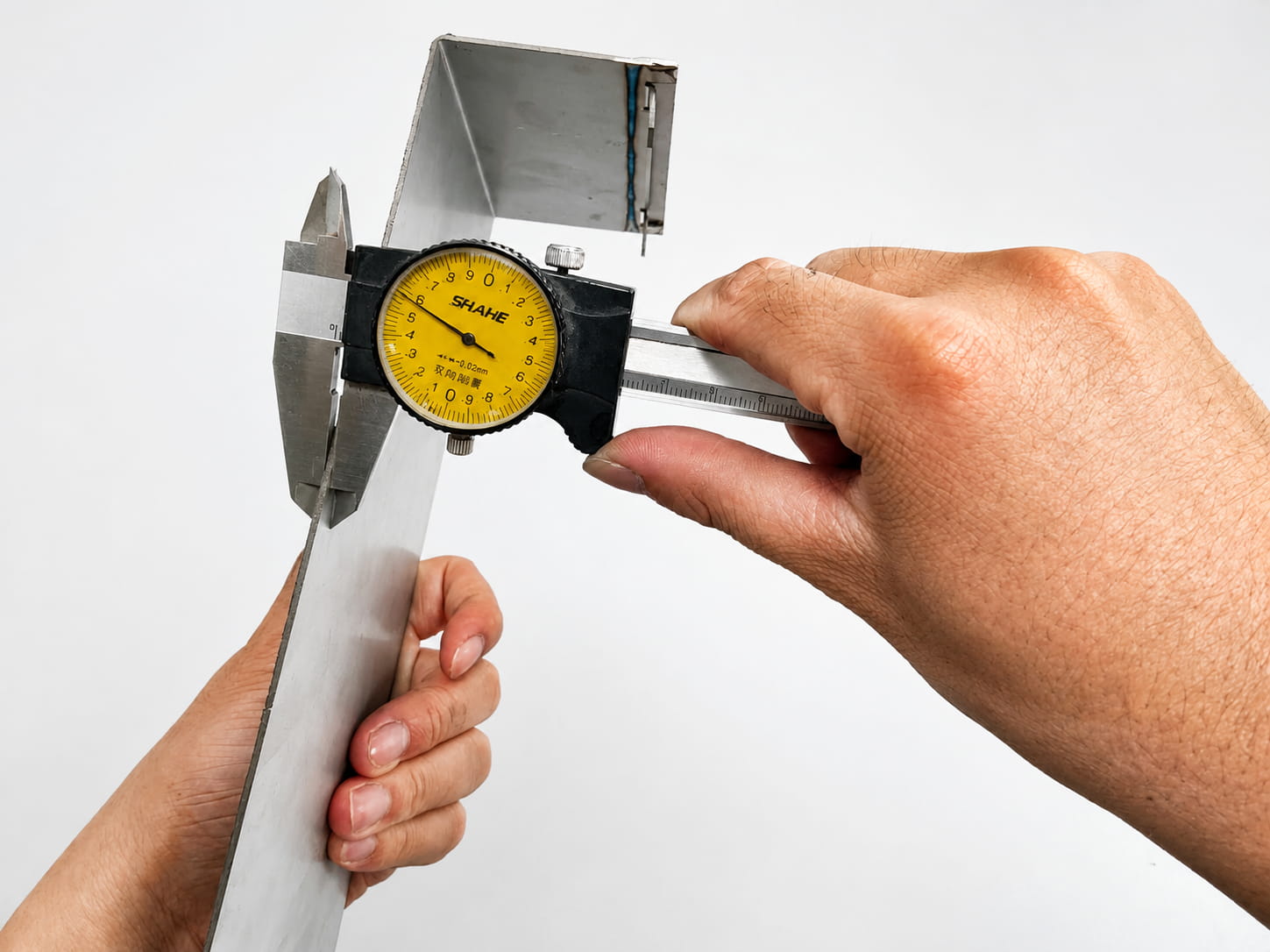
A sheet metal fabrication supplier is judged long before the first drawing is sent. Seven checks that predict whether a batch arrives right.
Most buyers evaluate a supplier with the same three questions: price, lead time, and whether the sample looked right. All three are answers about the past. By the time a sample is in your hands, the expensive decisions — who owns the part number, which operations leave the building, what happens when a dimension is unclear — have already been made and are hard to change. The checks below are the ones that actually predict how a batch will arrive, and every one of them can be done before you send a drawing.
The Supplier Is Picked Before the Drawing Is Sent, Not After
A sheet metal part passes through many hands: cutting, forming, welding, finishing, inspection, packing. If those hands belong to different companies, every transition is a place where responsibility can be handed off along with the part. That is why the choice of supplier is really a choice about how many handovers your part will survive. A shop that runs the full sequence internally has fewer seams to argue about; a shop that brokers part of the work is not automatically worse, but you should know which operations leave the building before you commit, because those are the ones you cannot audit.
Check One: What Happens Between Two Operations
Ask for the physical path of a part through the building, in order, and then ask what happens at each stop: where parts wait, how they are stacked, what protects a formed face from the next operation, and who signs the batch over. The answers tell you more than a capability list ever will. A shop that can describe its own flow in sequence — cut, form, weld, finish, inspect, pack — with a named owner at each stage is a shop that has thought about where parts get damaged. A shop that answers "we handle everything" without being able to name the steps is telling you the flow is improvised. Our own process runs through one 5,000 m² facility with more than 50 machines, which is why we can walk a visitor through it in order rather than describing a supply chain.
Check Two: Read the Equipment List for Gaps, Not for Counts
A long equipment list is easy to produce and hard to interpret. What matters is not how many machines a shop owns but whether the list closes the loop for your part: can it cut the thickness you need, form the height you drew, weld the material you specified, and finish the surface you asked for? A shop with two lasers and one turret punch but no press above 250 tonnes is a perfectly good supplier for a thin enclosure and the wrong one for a heavy formed base. Before sending a drawing, read the list against your part and note the operations that are missing. Ask about those specifically. If the answer is "we send it out", you have found the seam in the process, and you can decide whether you are comfortable with it.
Check Three: Ask Which Check Catches Which Failure
"We inspect every part" is not an answer; it is a slogan. The useful question is narrower: at which points in the flow is the part checked, and what failure is each check meant to catch? Incoming material checks catch mixed grades and wrong thickness. A first-piece check catches a setup that is off before the run consumes material. In-process checks catch drift. An assembly-fit check catches tolerance stack that individual dimensions pass. A pre-dispatch check catches the part that passed everything and still does not look right. A supplier who can map five checkpoints to five different failure modes is running a system; a supplier who cannot is relying on the operator's attention. Ask to see the record from one of those checks on a recent job — the format of the paperwork tells you whether it is real.
Check Four: Ask What They Cannot Do In-House
Every factory outsources something — heat treatment, anodising, plating, sometimes laser cutting during a surge. The point of the question is not to catch a lie; it is to see whether the answer is specific. A supplier who says "everything is in-house" either runs an unusually wide plant or has not looked closely at their own routing. A supplier who names the three operations they send out, and can say who does them and how those parts are checked on return, has given you a map of their risk. The same question also reveals how they handle a job that is outside their comfort zone: do they decline, quote it anyway, or bring in a partner they can stand behind? All three are legitimate answers, but only the first two tell you the truth early.
Check Five: Test the Question Loop Before You Test the Price
Send a real drawing with one deliberately open point — a finish that is described but not specified, or a tolerance that could be read two ways — and watch what comes back. A weak supplier quotes anyway, guessing silently. A better one quotes with a list of assumptions. The best one comes back with two or three precise questions and, often, a note about something you had not considered. That loop is what you will live with for the length of the project, on every revision. Test it while the stakes are low: the speed and quality of the first question usually predicts the speed and quality of the twentieth. Every enquiry we answer goes out within 24 hours for exactly this reason — it is the cheapest proof a buyer can collect.
Check Six: Compare a Sample Quote With a Repeat Quote
One quote tells you a price. Two quotes for the same part at different quantities tell you how the supplier thinks. Ask for the same drawing at prototype quantity and at production quantity, then read how the two numbers relate: what disappears with volume, what stays fixed, and whether tooling is charged up front or amortised. The comparison exposes the shop's real cost structure and, more usefully, exposes whether they are willing to tell you when a die is not worth it. A supplier who only quotes the volume they prefer is steering you toward their convenience. A supplier who prices both honestly is giving you the decision. For parts where our process does not need a die at all, that difference shows up immediately in the prototype number.
Check Seven: Ask for the Name of the Person Who Owns Your Part Number
The last check is the simplest and the most revealing. Ask who, by name, will be responsible for your part number from the first sample to the tenth repeat order — and what happens when that person is on holiday. Factories that assign ownership can answer in one sentence. Factories that distribute work by whichever machine is free cannot, and in those factories your history lives in someone's inbox. Ownership is what makes a revision land in the right place, keeps the inspection record attached to the right batch, and prevents the slow drift where each reorder is quietly a little different from the last. If nobody owns the number, nobody notices the drift.
Conclusion
None of these seven checks requires an audit, a factory visit, or a formal questionnaire. Each is a question you can send in an email today, and each one is hard to answer convincingly without actually running the process that way. Taken together they tell you what a sample never can: how the shop behaves on the ninety-ninth part, not the first. If you would like to run the checks against us, start with the one that is easiest to verify — our workshop in Zhongshan is described step by step, and every claim on this site can be traced to a machine, a record, or a person. Buyers in food equipment usually add one more question about washdown and hygiene, which is why we keep a separate page on commercial kitchen metalwork.
Frequently Asked Questions
Should I visit a factory before choosing a supplier?
A visit is useful but not decisive, and it is often impossible before a first order. The seven questions above can be asked remotely and are harder to fake than a tidy showroom. If you do visit, spend the time on the transitions between operations rather than the machines — where parts wait, how they are stacked, who signs them over.
Is a lower price a warning sign?
Not by itself, but a price that is far below the others usually means something was left out: an operation, a finish, an inspection, or the cost of fixing the parts later. Ask what the quote includes and what it does not. A supplier who can itemise the exclusions is usually quoting honestly, even when the number is the lowest.
What is the fastest way to judge a supplier's quality system?
Ask for one inspection record from a recent job and read it. A real record has a batch reference, measured values, a checker and a date. A blank template or a certificate tells you the system exists; a filled record tells you it is used.
How many suppliers should I evaluate before deciding?
Two or three is enough if you ask the same questions of each and compare the answers side by side. Comparing five quotes on price alone usually produces a decision you cannot defend later. Comparing two suppliers on how they answer the seven checks produces one you can.
Run the checks on us before you send a drawing. Tell us the part and the environment it lives in, and we will answer every question — including the operations we do not do — within 24 hours.