
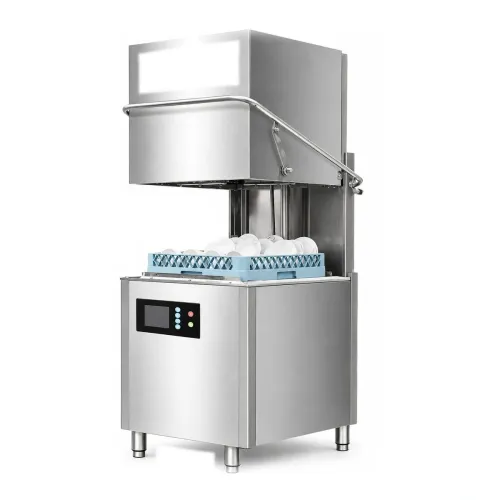
Features
Why Choose Juduo?
Every Process Under One Roof
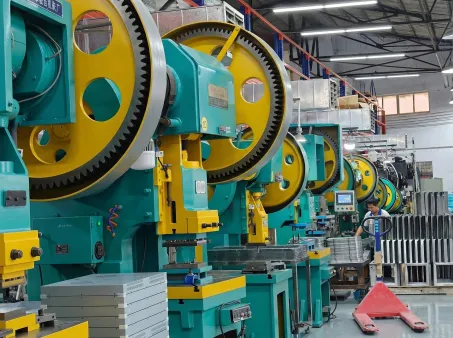
From laser cutting and CNC turret punching to stamping, bending, robotic welding, riveting, tapping and polishing, every operation runs inside our own 5,000 m² facility on more than 50 machines. Nothing leaves the building between steps, so one part number stays under one responsibility from raw sheet to finished assembly — no handovers, no gaps to argue about.
Not Every Part Needs a Die
Laser cutting and turret punching work with standard tooling, so prototypes, small batches and late design revisions carry no tooling cost at all. We propose a die only when the quantity and the geometry make it the cheaper route — and we tell you which side of that line your part sits on before you commit.
Checked at Five Points, Not at the End
Incoming material, first piece, in-process, assembly fit and pre-dispatch are each checked separately under an ISO 9001:2015 system, with stamping pass rates running at 99.8%. The reason for checking early is simple: a problem found at first piece costs one part, while the same problem found at dispatch costs the whole batch.
A Drawing, a Sample or a Photograph Is Enough to Start
Send PDF, STEP, IGS, DXF or PNG files, or send the part itself. Where no drawing exists, we design and manufacture to your requirement, then move from approved sample to small batch and repeat production. Every enquiry is answered within 24 hours.
We Have The Best Solutions for Your Business
Founded in 2016, Zhongshan Juduo Hardware Products Co., Ltd. specializes in build-to-print metal stamping and sheet metal fabrication. We manufacture equipment housings, metal cabinets, structural assemblies, and stamped components according to customers’ drawings, samples, and technical requirements.
Led by a founder with more than 20 years of industry experience, our team supports tooling development, prototyping, small-batch production, and repeat orders. We work with customers to review materials, dimensions, tooling, and manufacturing requirements before production, helping balance manufacturability, quality, and cost. Surface finishing can also be coordinated through our qualified production partners.
Commercial Kitchen Equipment Metal Parts: The Failure That Cannot Be Polished Out
Parts come back from service for two reasons. One is dimensional, and it shows up on a gauge within minutes of arrival. The other is a dark line inside a folded edge that nobody saw until someone ran a torch along the underside during an audit. The first kind can be reworked. The second kind cannot, because by the time it is visible the material around it has already been through two years of cleaning chemicals, and no amount of polishing will reach the place it started.
The One Failure Mode That Cannot Be Polished Out
Commercial kitchen equipment metal parts fail in service in a way that has very little to do with the material. A gap holds moisture against a surface, the moisture carries whatever the cleaning routine puts into it, and the surface underneath has no air and no drainage. The result is a narrow line of attack that grows slowly and is invisible from the side anyone looks at.
Polishing makes this worse rather than better. A polishing mop rounds the mouth of a crevice and closes it slightly, so the gap looks tidier while the material inside it stays exactly where it was. The part passes a visual check more easily and fails in service in the same place it would have failed before. This is why we treat cleanability as a geometry question decided at the drawing stage, and why a fabricator who can only offer a better finish is not really solving the problem.
Five Places Contamination Collects in Fabricated Metal
Across kitchen equipment, the same five locations account for most of the trouble. They are all created during fabrication, and all of them can be designed out.
Under a hem. A folded edge is the most common hiding place on a panel, because the fold is tight, the gap is tiny and the opening faces downward where nobody looks. A hem that is set fully closed, or replaced with a formed return and a welded corner, removes the pocket entirely.
Along a lap seam. Two overlapping sheets create a capillary gap along the whole length of the overlap. Stitch welding the ends seals the appearance but not the gap. The fix is either a continuous weld on the exposed side, a closed seam, or a design that puts the overlap where liquid cannot reach it.
At the root of a partial-penetration weld. A fillet weld that does not fuse through leaves a crevice on the far side, inside a box section where it will never be seen. This is the single most common source of rust-through on welded stainless assemblies, and it is decided entirely by whether the drawing asked for fusion or for appearance.
In blind holes and tapped pockets. A hole that does not pass through is a cup. It fills, it dries slowly, and in a chloride environment it pits from the bottom. Through-holes, or blind holes that are explicitly sealed, avoid the problem.
At open section ends. Square tube and formed channels are hollow, and the ends are often left open because capping them is an extra operation. Anything that runs into an open end stays there. Caps, closed ends or a deliberate drain path at the low point all work; leaving it to chance does not.
Designing Drainage and Slope Into a Flat Part
A flat panel sounds like the easiest part on the equipment, and it is the one where water sits most often. Sheet metal is never perfectly flat once it has been formed and welded, and a low spot of a fraction of a millimetre is enough to hold a film of liquid indefinitely.
The remedies are ordinary press-brake work. A shallow crown formed across the panel makes it shed toward the edges. A pressed rib or a swage line creates a channel and stiffens the part at the same time. A drain hole placed at the lowest point of that channel — not in the geometric centre of the blank — gives the liquid somewhere to go. Where the panel sits inside a frame, the frame's own low point decides where the hole belongs, which is a question about the assembly rather than about the panel.
Deburring direction matters more than it seems. A hole punched from one side leaves a small burr on the other, and if that burr sits on the wetted face it holds a ring of liquid around the opening. Cutting from the dry side, or deburring both faces on a drain feature, takes seconds at the machine and prevents a ring of corrosion that looks like a material fault three years later.
Welds: Continuous, Ground, or Neither
Three weld conditions get used on kitchen parts, and they cost very different amounts. The mistake is to specify the most thorough one everywhere.
Continuous, not dressed. A full-length weld that is left as welded. It seals the joint and is the cheapest way to make a connection watertight, but the bead remains a raised feature that collects residue on its upstream side. Suitable for structural joints, hidden faces, and anywhere the surface is not food-contact.
Continuous, dressed flush. The same weld, ground and blended into the parent surface. This is what food-contact and visible faces usually need, and it is where most of the labour sits: grinding, blending and re-finishing to match the surrounding grain. It also thins the section slightly and puts heat into the part twice — once welding, once grinding.
Intermittent. Stitch welds at intervals, used for stiffness and location rather than sealing. Perfectly sound where the joint is not exposed to liquid, and a guaranteed crevice wherever it is.
Because these three carry very different costs, the drawing has to say which applies to which joint. "Welded" alone will be read as the cheapest interpretation by any shop under price pressure, and the part will look correct from the outside. Where a joint has to be sealed on one side only, saying which side is also part of the instruction, because access for the torch is decided by the assembly sequence rather than by the weld symbol.
Fasteners, Rivets and the Gaps They Create
Anything that joins two pieces of metal without welding creates a gap, and the choice of fastener decides how bad that gap becomes.
Blind rivets are fast and leave a small mandrel head inside the section, plus a hole through both sheets that is only as tight as the drill allowed. They are fine inside a housing and a poor choice on a face that gets wiped. Self-tapping screws cut a thread into the sheet, which removes the protective surface at the cut and leaves a spiral gap; on stainless in a wet environment they are a common starting point for pitting. Machine screws into captured or riveted nuts are the better pattern for parts that must come apart, because the thread is formed in a separate component and the joint can be re-closed to the same tension repeatedly.
Head style is a cleaning decision as much as an aesthetic one. A countersunk screw leaves a flush surface that a cloth passes over; a pan head leaves a circle that a cloth goes around. Where the fastener sits on a food-contact face, countersinking is usually worth the extra operation. Where it sits inside a service panel, it usually is not.
Reading a Drawing for Cleanability Before It Is Quoted
A fabrication review that takes cleanability seriously looks at five things, none of which appear in a tolerance block: every fold and whether it is closed, every overlap and whether it is sealed, every weld and whether it fuses through, every hole and whether it passes through, and every fastener and what its head leaves behind.
When one of those cannot be resolved from the drawing, the useful moment to raise it is before quotation. A question at that stage costs a day. The same question after the parts are welded costs a rework decision, and after the equipment is in service it costs a service call and a reputation. Components formed and finished for wet environments are not made by a special process; they are made by resolving these five points deliberately.
This is also why the inspection that matters on kitchen parts is not only dimensional. The inspection steps applied to each batch include weld condition and surface continuity, because a part that measures correctly and traps residue is not a conforming part in any sense the end user cares about.
Conclusion
Every kitchen metal part encloses a small volume of air, and whatever gets into that volume stays there. The work of making a part cleanable is the work of closing, draining or eliminating those volumes while the part is still a drawing. Folds, overlaps, partial welds, blind holes and open section ends are the five doors, and each one can be shut with a detail that costs far less than the problem it prevents.
A supplier who understands this will ask about the joints before quoting, will say which weld condition each joint needs, and will put the drain where the water actually goes. That is a more useful conversation than a discussion about finish, because finish is what a part looks like when it arrives, and geometry is what it looks like after five years.
Frequently Asked Questions
Is a ground weld always better than one left as welded?
No. Grinding improves cleanability on exposed and food-contact faces, but it thins the section, adds heat and costs time. On a structural joint inside a housing, an undressed continuous weld is stronger, cheaper and no harder to clean, because nobody is trying to clean it. The right question is which face the weld is on, not how good the weld looks.
Can hemmed edges be used on food-contact panels?
Only if the hem is fully closed and the open end is dealt with, otherwise it becomes the classic hidden pocket. A closed hem with welded or sealed ends is acceptable; a loosely folded edge on a surface that gets wiped is not, no matter how neat it looks when new.
Does polishing remove rust that has already started?
It removes the visible stain and leaves the cause, which is usually a crevice or a contaminated surface next to the polished area. Where corrosion has started from a gap, the material inside that gap is still affected, and the stain returns. Fixing the geometry or the weld is the only durable answer.
How do you check a part for cleanability before shipping?
By looking at the places residue would go rather than at the dimensions: fold openings, overlap seams, weld roots, hole through-conditions and fastener heads. Where the drawing defines these, they are checked as part of the inspection plan; where it does not, they are raised with the customer rather than decided on the floor.
Send the part before the joints are frozen
Send the Parts for ReviewPDF, STEP, IGS, DXF or PNG | Folds, seams and weld conditions checked | Feedback within 24 hours
User Reviews
What users say about Juduo
Frequently Asked Question
Do you have any question?
Almost always geometry, not material. A part is hard to clean when a cloth or a brush cannot follow every surface: sharp internal corners, overlapping sheets, open tube ends, proud weld beads, blind holes, and the underside of a hem. Stainless steel does not make a part cleanable; it only makes it survive being cleaned. A part with a hidden gap will hold residue in the same way whether it is made from stainless or from mild steel.
Where the hole's position matters relative to a formed feature, the flat pattern should carry it and the hole is cut before forming, because bending afterwards moves the material around it. Where the hole is only there to let liquid out of a closed section, forming first and drilling afterwards is often more accurate. Either way the drawing should show the low point, because a drain hole placed by eye in the middle of a panel drains nothing.
Yes, with a continuous weld on the wetted side, and it is a different instruction from a stitch weld. The distinction has to be on the drawing: a continuous seal weld takes longer, puts more heat into the part and needs the joint to be designed with access for the torch. Where a joint cannot be fully welded, the alternative is a closed lap seam or a formed channel that lets liquid run off instead of sitting in the gap.
By naming the joints rather than the intention. A note such as "all joints in food-contact areas continuous weld, dressed flush" is manufacturable; "no crevices" is not. The same applies to sheet overlaps, which should state whether the seam is closed along its full length or stitched at intervals, and to internal corners, which should carry a radius rather than a right angle. Anything that cannot be measured or pointed at will be interpreted differently by every shop that quotes it.
Our updates and blog posts
Aluminum Sheet Metal Parts: What Changes When the Drawing Says Aluminum
Aluminum sheet metal parts need a different bend radius, weld preparation, handling rule and finishing route. What to specify before you send the drawing.
How Sheet Metal Lead Times Are Built, and Where the Days Go
Sheet metal fabrication lead time is a chain of material, queues, finishing and inspection decisions. Where the days go, and what buyers can control.
How to Choose Sheet Metal Material: Five Options and the Questions That Separate Them
How to choose sheet metal material depends on environment, process and finish, not strength. Compare stainless, carbon, galvanized, cold-rolled and aluminum.