
Features
Why Choose Juduo?
Every Process Under One Roof
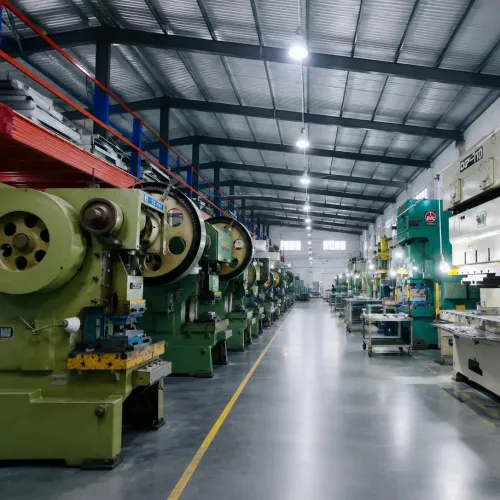
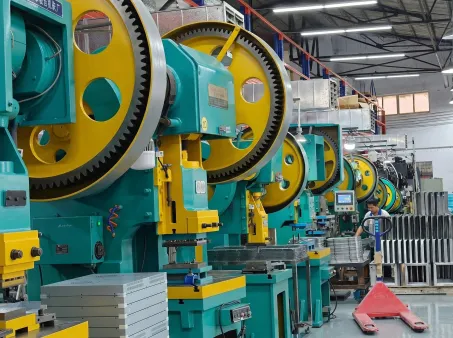
From laser cutting and CNC turret punching to stamping, bending, robotic welding, riveting, tapping and polishing, every operation runs inside our own 5,000 m² facility on more than 50 machines. Nothing leaves the building between steps, so one part number stays under one responsibility from raw sheet to finished assembly — no handovers, no gaps to argue about.
Not Every Part Needs a Die
Laser cutting and turret punching work with standard tooling, so prototypes, small batches and late design revisions carry no tooling cost at all. We propose a die only when the quantity and the geometry make it the cheaper route — and we tell you which side of that line your part sits on before you commit.
Checked at Five Points, Not at the End
Incoming material, first piece, in-process, assembly fit and pre-dispatch are each checked separately under an ISO 9001:2015 system, with stamping pass rates running at 99.8%. The reason for checking early is simple: a problem found at first piece costs one part, while the same problem found at dispatch costs the whole batch.
A Drawing, a Sample or a Photograph Is Enough to Start
Send PDF, STEP, IGS, DXF or PNG files, or send the part itself. Where no drawing exists, we design and manufacture to your requirement, then move from approved sample to small batch and repeat production. Every enquiry is answered within 24 hours.
We Have The Best Solutions for Your Business
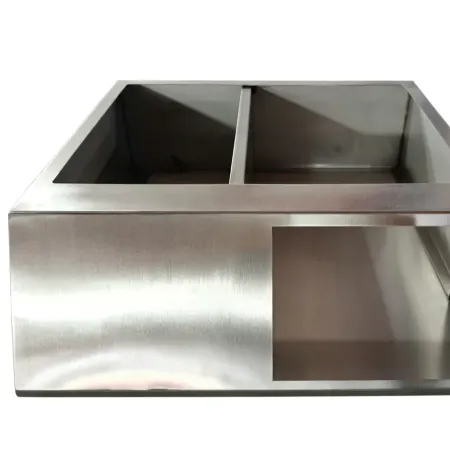
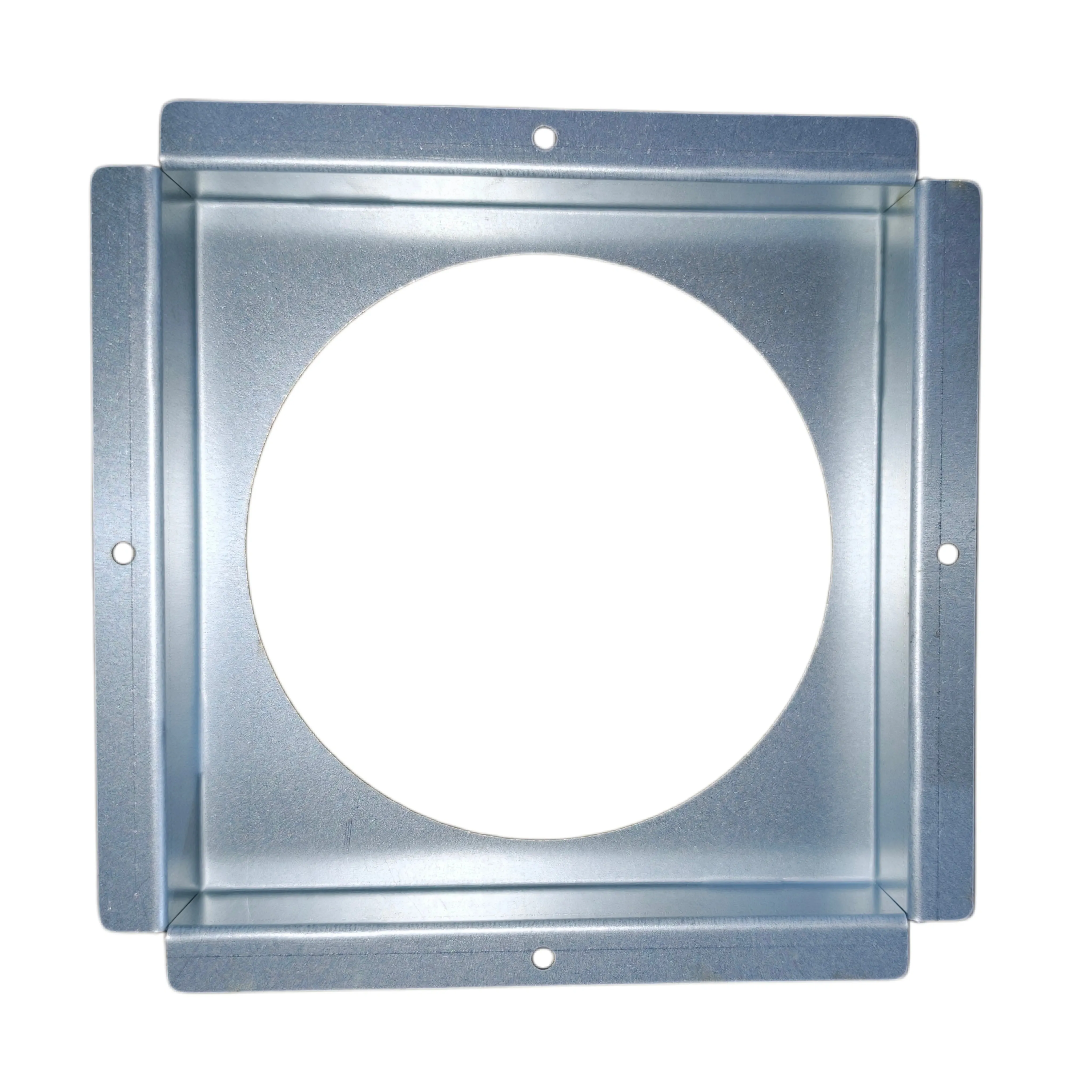
Founded in 2016, Zhongshan Juduo Hardware Products Co., Ltd. specializes in build-to-print metal stamping and sheet metal fabrication. We manufacture equipment housings, metal cabinets, structural assemblies, and stamped components according to customers’ drawings, samples, and technical requirements.
Led by a founder with more than 20 years of industry experience, our team supports tooling development, prototyping, small-batch production, and repeat orders. We work with customers to review materials, dimensions, tooling, and manufacturing requirements before production, helping balance manufacturability, quality, and cost. Surface finishing can also be coordinated through our qualified production partners.
Custom Sheet Metal Parts Manufacturer: What a Part Number Actually Buys
A purchase order for a metal part looks like a transaction about a quantity. It is really a transaction about a definition that has to survive time. The part you receive in three years has to match the part approved today, and that only happens if somebody kept the drawing, the revision history, the tooling and the inspection record attached to the same number. That archive, not the machine list, is what a parts manufacturer actually sells.
What a Part Number Actually Buys
A part number is a promise of identity. It says that this geometry, this material, this finish and this acceptance standard travel together, and that any future order for the same number will reproduce them without reopening the design conversation.
What sits behind that promise is unglamorous. An approved drawing at a specific revision. A first-article inspection that proves the process can meet it. A routing that records how the part is made. Tooling or programs that hold the geometry. And a packing method that has been agreed rather than improvised. A manufacturer who has these can quote a repeat order in minutes; one who does not has to reconstruct the job every time, and the reconstruction is where variation enters.
This is why the cheapest first order is not always the cheapest part. A supplier who builds the archive as part of the first delivery costs slightly more up front and considerably less over five years, because the second and third orders are administrative rather than technical.
From First Article to Serial Supply: The Life of One Part Number
A part number passes through three states, and each fails in a characteristic way.
First article. The definition becomes physical. This is where every interpretation of the drawing is exposed: which dimension was treated as functional, how a tolerance was read, what the finish actually looks like. A first article that is signed off without measurement is not an approval, it is an acceptance of whatever arrived.
Serial supply. The process proves it can repeat. The failure mode here is drift rather than error: a tool wears, a material batch differs slightly, a fixture is re-set after maintenance and not quite the same. This is what in-process inspection is for, and it is why the first article alone does not guarantee a production year.
Reorder. The archive is reused. The failure mode is loss: the drawing has been superseded but the old copy is still in the folder, the tooling has been moved and not re-proven, the person who ran the job has left. A reorder that goes wrong is almost always an archive problem rather than a manufacturing one.
Change Control: Who Holds the Revision After the First Order
After the first delivery, the drawing exists in at least two places: with the customer and with the manufacturer. Keeping those two copies identical is a discipline, and it is the one most likely to lapse quietly.
The mechanism that works is simple. Every change gets a revision identifier and a date, and the change is described in a line rather than only shown in geometry. The manufacturer confirms which revision is in production before each run. And the superseded file is withdrawn from the folder that orders are placed from, so it cannot be sent by accident.
The common failure is not a supplier ignoring a new drawing. It is a change made internally that never reaches the purchase order — an engineering note, a marked-up sample, an email agreeing to move a hole. The part arrives to the drawing that was on the order, which is exactly what was asked for, and the disagreement is about a document nobody sent.
Tooling, Fixtures and the Inventory Behind a Number
Behind a part number there is usually more hardware than the buyer expects: a die or a set of form tools, welding fixtures, drilling jigs, an inspection gauge, and the CNC programs that cut the blank. Each one is a small asset with a condition that determines whether the next run is straightforward.
Tooling that is used regularly stays in condition because it is exercised. Tooling for a part ordered twice a year deteriorates differently: it sits, it oxidises, it gets moved to make space, and the next run begins with a re-proving step that nobody budgeted for. A manufacturer who knows where the tool is and when it was last run can tell you what the reorder will involve before you place it.
Material inventory matters for the same reason. A standard grade in a common thickness is usually available at short notice; a specific grade in a specific width may not be. Knowing which parts depend on material that has to be ordered in advance is part of managing the number, and it is the kind of thing that only becomes visible when a reorder is needed urgently.
When a Part Is Discontinued or Replaced
Every part number eventually stops being ordered, and how that is handled decides whether the last years of a product's life are calm or expensive.
Two things are worth agreeing in advance. The first is notification: how much warning the manufacturer gives before a material, a process or a subcontractor disappears. The second is the final order: whether a last-time buy can be placed, and how the parts will be stored so they are still usable when they are needed.
When a part is replaced rather than discontinued, the new number starts its own life with its own first article. Carrying the old number forward with a changed material or geometry is a common shortcut and a bad one, because the traceability that made the number useful is exactly what the shortcut destroys.
Auditing a Manufacturer by Their Records, Not Their Brochure
Capability statements all look alike, because they are written to look alike. Records are harder to fake, and five of them are worth asking for before a first order.
A first-article report from a comparable part, with the revision it was measured against. A sample routing showing the operations and the inspection points. The change-control procedure, in whatever form it exists. A list of what is subcontracted. And a packing specification for a part similar to yours.
None of these are commercially sensitive, and a manufacturer who has them can produce them in a day. Parts manufactured under one part number from start to finish are only as reliable as the paperwork that follows them, and the paperwork is visible before the order.
It is also reasonable to ask how long records are kept and in what form. The records kept for each production lot are what answer a question two years later about a specific batch, and a manufacturer who cannot describe their retention practice usually does not have one.
Conclusion
What a parts manufacturer sells is continuity. The metal is a commodity, the machines are comparable, and the price per piece converges over time. What does not converge is whether the third order matches the first, and that depends entirely on whether the number was managed as a record rather than a transaction.
So the useful question in a supplier review is not "what can you make" but "what will you still have when I come back". A drawing at a known revision, a tool at a known condition, and an inspection record at a known location are the three answers that matter.
Frequently Asked Questions
Do you keep tooling between orders?
Yes. Dies, fixtures and gauges are stored under the part number they serve, with their condition recorded, so a reorder can begin with a known starting point rather than an inspection. Where a tool has not run for a long period, it is checked and re-proven before the batch is released.
How long do you retain inspection records?
Retention is agreed with the customer at the start, because different industries require different periods. What matters is that the period is stated rather than assumed, and that the record identifies the batch, the revision and the measurements taken, so a question about a delivered lot can be answered from the file rather than from memory.
Can you supply the same part to two of our plants?
Yes, and it is worth deciding whether that is one part number or two. A single number supplied to two locations keeps the definition identical, which is usually what a service organisation wants. Separate numbers allow different revisions or packing per plant, at the cost of two records to maintain.
What happens if a drawing revision arrives after an order is placed?
It is treated as a change rather than an instruction, and its effect is assessed against material already cut, tooling already set and any fixtures affected. Where production has not started, the revision is usually absorbed into the same order. Where it has, the affected quantity is discussed before anything is scrapped or reworked.
Send the number, not just the drawing
Send a Part Number for ReviewPDF, STEP, IGS, DXF or PNG | Revision and tooling status confirmed | Feedback within 24 hours
User Reviews
What users say about Juduo
Frequently Asked Question
Do you have any question?
The things that make a second order repeatable: the approved drawing revision, the first-article inspection record, the process route and program, any tooling or fixtures built for the part, and the packing specification. Whether this archive exists is the difference between a supplier and a source. Without it, every reorder is a new project that starts from a drawing and a hope.
By transferring the definition rather than the part. Send the drawing with its revision, the approved sample if one exists, and any specification the previous supplier worked to — material, finish, inspection scope, packing. Where no drawing exists, the incoming supplier measures the part and produces one, and the differences between that drawing and the parts in service should be listed before the first batch is made.
It depends on what was agreed, and that agreement is best made before the tool is cut. Some buyers pay for tooling separately and own it; others accept a part price that includes it. What matters practically is the transfer condition: whether the tool can be moved, in what condition, and who bears the cost of making it run elsewhere. A die that nobody can move is a lock-in that only becomes visible at the worst possible moment.
Not under the same number, and treating it as a minor change is how traceability breaks. Changing the material changes the process, the tooling assumptions, the finish and often the dimensions that can be held. The right approach is a new revision or a new part number with its own first article, so that a service engineer looking up the number knows which version is in the machine.
Our updates and blog posts
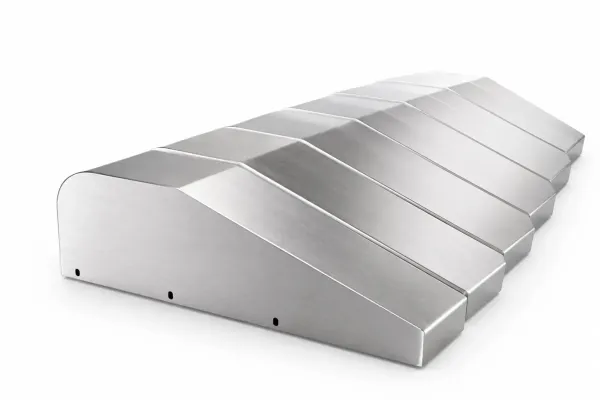
Aluminum Sheet Metal Parts: What Changes When the Drawing Says Aluminum
Aluminum sheet metal parts need a different bend radius, weld preparation, handling rule and finishing route. What to specify before you send the drawing.
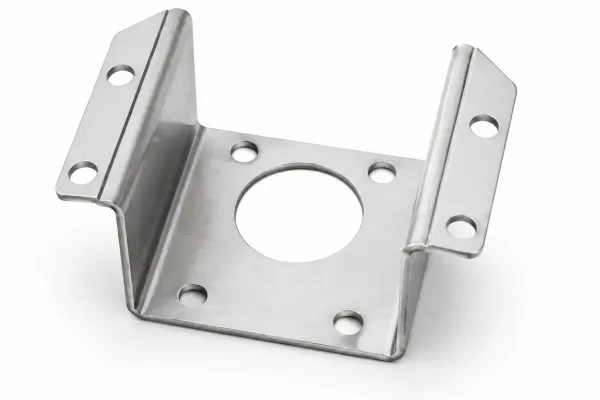
How Sheet Metal Lead Times Are Built, and Where the Days Go
Sheet metal fabrication lead time is a chain of material, queues, finishing and inspection decisions. Where the days go, and what buyers can control.
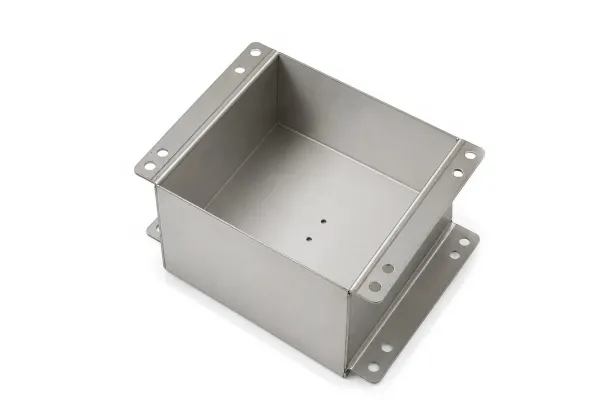
How to Choose Sheet Metal Material: Five Options and the Questions That Separate Them
How to choose sheet metal material depends on environment, process and finish, not strength. Compare stainless, carbon, galvanized, cold-rolled and aluminum.