

Features
Why Choose Juduo?
Every Process Under One Roof
From laser cutting and CNC turret punching to stamping, bending, robotic welding, riveting, tapping and polishing, every operation runs inside our own 5,000 m² facility on more than 50 machines. Nothing leaves the building between steps, so one part number stays under one responsibility from raw sheet to finished assembly — no handovers, no gaps to argue about.
Not Every Part Needs a Die
Laser cutting and turret punching work with standard tooling, so prototypes, small batches and late design revisions carry no tooling cost at all. We propose a die only when the quantity and the geometry make it the cheaper route — and we tell you which side of that line your part sits on before you commit.
Checked at Five Points, Not at the End
Incoming material, first piece, in-process, assembly fit and pre-dispatch are each checked separately under an ISO 9001:2015 system, with stamping pass rates running at 99.8%. The reason for checking early is simple: a problem found at first piece costs one part, while the same problem found at dispatch costs the whole batch.
A Drawing, a Sample or a Photograph Is Enough to Start
Send PDF, STEP, IGS, DXF or PNG files, or send the part itself. Where no drawing exists, we design and manufacture to your requirement, then move from approved sample to small batch and repeat production. Every enquiry is answered within 24 hours.
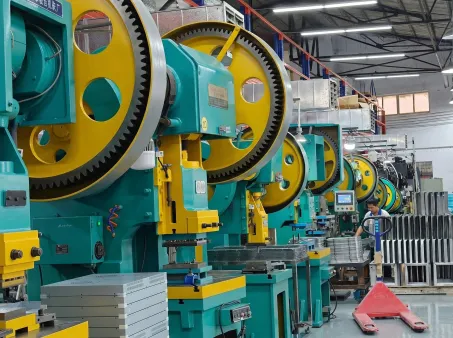
We Have The Best Solutions for Your Business
Founded in 2016, Zhongshan Juduo Hardware Products Co., Ltd. specializes in build-to-print metal stamping and sheet metal fabrication. We manufacture equipment housings, metal cabinets, structural assemblies, and stamped components according to customers’ drawings, samples, and technical requirements.
Led by a founder with more than 20 years of industry experience, our team supports tooling development, prototyping, small-batch production, and repeat orders. We work with customers to review materials, dimensions, tooling, and manufacturing requirements before production, helping balance manufacturability, quality, and cost. Surface finishing can also be coordinated through our qualified production partners.
Custom Metal Stamping Parts: Where the Cost Is Actually Locked
A stamped part's price is often treated as something the supplier calculates and the buyer negotiates. In reality most of it is written into the drawing before anyone quotes: how the part nests in a coil, how far its holes sit from its edges, how tall its forms are asked to be, and how tight its critical dimensions need to hold. Change those and the price moves for reasons that have nothing to do with margin.
Most of a Stamped Part's Cost Is Fixed Before the Die Is Cut
Once a die exists, three things are effectively locked: the strip layout, the sequence of operations, and the clearance between punch and die at every feature. Those three determine material consumption, machine time and the range of dimensions the process can hold. A buyer who wants a lower price after tooling has been built is asking for one of them to change, which means cutting metal.
This is why the most valuable conversation in a stamping project happens before the quotation, when the part is still a set of lines on a screen. At that point there are usually three or four changes available that cost nothing to make and reduce the part price for the rest of its life. After tooling, the same changes are projects.
The practical habit worth adopting is to treat a stamped part drawing as a cost document rather than a shape document. Every feature on it consumes material, tool life or inspection time, and each one can be asked a simple question: does this feature earn what it costs?
Material Utilisation: The Feature That Decides Your Blank Layout
In a progressive die, parts are made from a continuous strip, and everything between the parts becomes scrap. The percentage of the coil that ends up as product is decided by the outline, the strip width and how the part is oriented — a decision made once and paid for on every unit.
Four levers move that number without changing what the part does. Rotating the part relative to the strip so its longest dimension runs along the coil. Pairing a left-hand and right-hand version so they nest against each other. Adjusting a non-functional tab or flange so the strip can be narrower. And accepting a small change to an outline that currently forces a wide strip for the sake of a few millimetres of material.
There is a counter-intuitive case worth knowing: sometimes adding a feature saves money. A part whose outline leaves an unusably narrow web at the strip edge can force a wider coil than the part needs, and trimming that edge back — or adding a small tab that stabilises the strip — can reduce the material bill. Utilisation is a layout question, not a property of the part alone, and it is worth asking to see the layout rather than the percentage.
Holes, Slots and Edges: Distance Rules That Protect the Die
Every hole in a stamped part is made by a punch passing through a die opening, and the material left between features has to survive that. Too little material and it tears, distorts or work-hardens; too little support around the punch and the tool itself starts to break down.
The working rule most shops apply is that the web between a hole and an edge, or between two holes, should be at least as thick as the sheet. It is a rule of thumb rather than a law, and the real limit depends on the material and the direction of the cut, but it gives a designer something concrete to check. Where a drawing asks for less than that, the honest answer is usually a secondary operation, a different process, or a redesign of that feature.
Sharp internal corners are the other common source of tooling cost. A punch with a square corner concentrates stress and chips; a small radius spreads the load and lasts far longer. On a part where the corner is not functional, the radius costs nothing in performance and saves money in tool maintenance — which is a rare combination that designers tend to overlook.
Slots deserve their own note because they are often specified wider than they need to be. A slot narrower than the material thickness needs a punch that is slender in both directions, and slender punches break. Widening a non-functional slot by a fraction can remove a tool-life problem entirely.
Formed Features and the Height They Can Reach
Forming a stamped part is a controlled deformation, and every material has a limit to how far it can be pushed before it tears, thins excessively or springs back beyond recovery.
A flange formed from a flat blank draws material from the surrounding area, so its achievable height depends on the material's ductility and on how much surrounding material the design provides. A flange specified taller than the material can supply does not fail gracefully; it tears at the root or thins until it cracks in service. When a drawing needs a tall flange, the usual answer is a drawn feature rather than a bent one, which changes the die entirely.
Bend direction relative to the rolling direction of the coil matters too. Bending across the grain is more forgiving than bending along it, and on a part with several bends in different directions the blank orientation may need to satisfy the most demanding one. That decision sits in the strip layout, which is another reason to look at the layout before approving the tool.
Springback is the quiet one. Every formed feature releases some elastic energy when the punch withdraws, and the amount depends on material, thickness, radius and the amount of cold work already in the part. Tooling compensates for it, but the compensation is specific to a material and a thickness. Changing either one after the die is made reintroduces an error the tool was built to remove.
Tolerance Bands and What They Add to the Process
A tolerance is an instruction about how much variation is acceptable, and variation has causes: die wear, press deflection, material thickness tolerance, coil-to-coil differences. Holding a tight band means either controlling those causes more closely or inspecting more parts to separate conforming from non-conforming.
Two habits keep this proportionate. Mark the dimensions that matter for fit and function rather than applying a tight general tolerance across the whole drawing, and check that each marked tolerance is achievable by the process that will make the feature. A tight callout on a dimension created by forming is far more expensive than the same callout on one created by piercing, because forming carries more variables.
It is also worth saying what a tolerance is not. It is not a guarantee of function; it is a statement about measurable geometry. A part can be inside every tolerance on its drawing and still fail in assembly because the drawing never described the interface that mattered. The dimensions worth tightening are the ones where a stack of parts meets another stack of parts.
A Drawing Review That Happens Before Tooling
The review we run before quoting a stamped part looks at six things, and each one has a price attached.
Material and thickness, stated explicitly rather than inferred, because both decide force, radius and clearance. Critical dimensions, marked so the inspection plan has targets. Which faces are visible, since a stamped edge and a formed face look different and one of them may need deburring or finishing. Burr direction, because a burr on a mating face is a fit problem and a burr on a hidden face is not worth removing. Secondary operations, listed rather than assumed. And how the parts will be packed and handled, which for thin or finished parts is part of the specification.
Where a drawing is silent on any of these, the review raises it. Custom stamped parts made to your specification start with that conversation, not with a die design. The point is not to slow the project down; it is that every one of these six items is cheaper to decide while the tooling is still a drawing.
The same review is where tolerance and finish get pinned down, since both are quoted rather than discovered. The tolerance and finish review that precedes quoting is the step that makes a stamping price comparable between suppliers — without it, two quotes can describe two different parts.
Conclusion
A stamped part costs what its drawing says it costs. Material utilisation, feature spacing, form height and tolerance band are the four levers, and all four are still free to move before the die is cut. Moving them afterwards means modifying a tool that was built to a different set of assumptions.
The most useful thing a buyer can do is therefore not to negotiate harder on the unit price but to ask for the strip layout and the list of critical dimensions. Those two documents explain the price, and they are also where the next saving usually is.
Frequently Asked Questions
Can a stamped part have a thread?
Yes, through tapping as a secondary operation or by pressing a captive nut or standoff into the part. Tapping directly into sheet is limited by thickness — too few threads and the joint strips under load — so on thin material the usual answer is a clinch fastener or a welded nut rather than a tapped hole.
How do you handle burrs on a stamped edge?
By controlling which side they land on and how tall they are allowed to be. A sheared edge always has a burr on the side the punch exits; the drawing can state a maximum and a permitted direction. Where the burr sits on a mating or handling face, deburring or tumbling is added, which is a cost that is easier to quote than to discover.
Does the grain direction of the coil matter?
For flat parts, rarely. For formed parts, yes: bending across the rolling direction is more tolerant than bending along it, and a part with a sharp bend along the grain is more likely to crack. The strip layout is where this is decided, which is why it is worth confirming before tooling rather than after the first tryout.
What is a first article and why does it matter?
It is the first part produced from the completed tooling, measured across the dimensions that matter and compared with the drawing. It is the point where the die proves it can make the part, and where any discrepancy is resolved before a production quantity is committed. Without a documented first article, the first real inspection happens at the customer, which is the most expensive place to find a problem.
See the strip layout before the die is cut
Send a Part for Cost ReviewPDF, STEP, IGS, DXF or PNG | Utilisation and tolerances reviewed | Feedback within 24 hours

User Reviews
What users say about Juduo
Frequently Asked Question
Do you have any question?
It varies too widely for a single figure, because it depends on the part outline, the strip width available and how the part nests. What can be said is that utilisation is a design outcome: rotating a part in the strip, adding a carrier tab in the right place, or accepting a slightly different outline often moves it significantly. Ask to see the strip layout before the die is approved, because that drawing shows more about the part's future cost than the quotation does.
The geometry usually can, but the process often cannot without changes. A thicker material needs more press force, larger bend radii to avoid cracking, more clearance in the die and possibly a different strip layout because the blank grows. It is a new tooling review rather than a material substitution, which is why a thickness change late in a programme is a costly request rather than an administrative one.
Because holding a tight band means controlling more variables: die clearance, press condition, material consistency from coil to coil and inspection frequency. On a stable feature the extra cost may be small; on a feature affected by forming, holding a band that the process naturally exceeds means either extra operations or a high inspection rate to sort good parts from bad. A tolerance is not a wish — it is an instruction to spend money.
A drawing review before quotation is part of quoting, not a separate service, and the questions it raises are returned with the price. What does cost money is a redesign after tooling exists, which is why we would rather spend an hour on the drawing at the start than a week on the die afterwards.
Our updates and blog posts
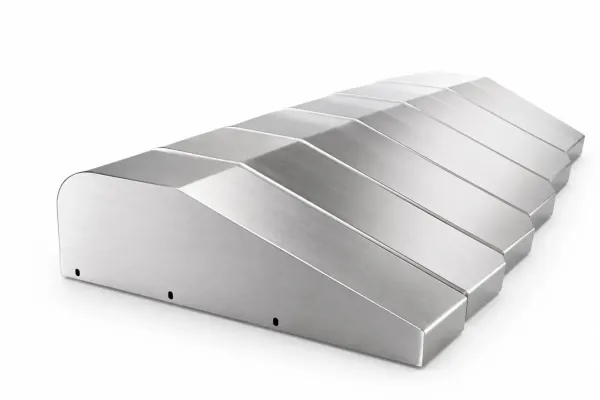
Aluminum Sheet Metal Parts: What Changes When the Drawing Says Aluminum
Aluminum sheet metal parts need a different bend radius, weld preparation, handling rule and finishing route. What to specify before you send the drawing.
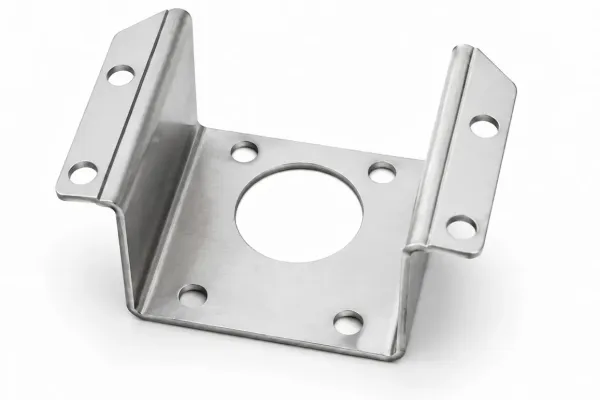
How Sheet Metal Lead Times Are Built, and Where the Days Go
Sheet metal fabrication lead time is a chain of material, queues, finishing and inspection decisions. Where the days go, and what buyers can control.
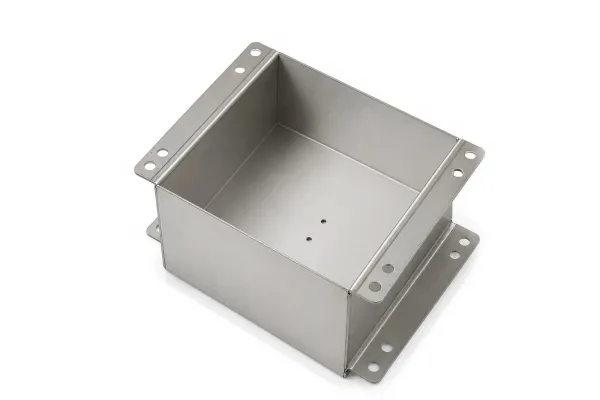
How to Choose Sheet Metal Material: Five Options and the Questions That Separate Them
How to choose sheet metal material depends on environment, process and finish, not strength. Compare stainless, carbon, galvanized, cold-rolled and aluminum.