
Features
Why Choose Juduo?
Every Process Under One Roof
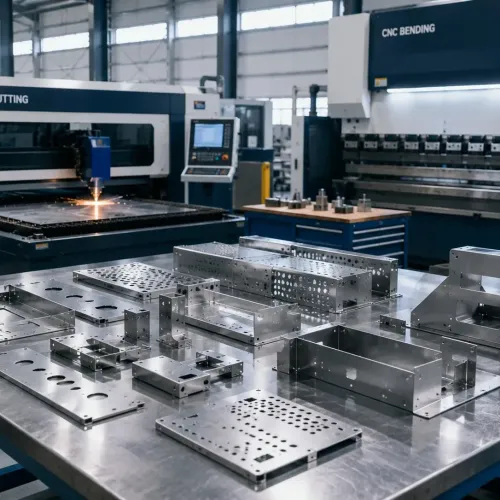
From laser cutting and CNC turret punching to stamping, bending, robotic welding, riveting, tapping and polishing, every operation runs inside our own 5,000 m² facility on more than 50 machines. Nothing leaves the building between steps, so one part number stays under one responsibility from raw sheet to finished assembly — no handovers, no gaps to argue about.
Not Every Part Needs a Die
Laser cutting and turret punching work with standard tooling, so prototypes, small batches and late design revisions carry no tooling cost at all. We propose a die only when the quantity and the geometry make it the cheaper route — and we tell you which side of that line your part sits on before you commit.
Checked at Five Points, Not at the End
Incoming material, first piece, in-process, assembly fit and pre-dispatch are each checked separately under an ISO 9001:2015 system, with stamping pass rates running at 99.8%. The reason for checking early is simple: a problem found at first piece costs one part, while the same problem found at dispatch costs the whole batch.
A Drawing, a Sample or a Photograph Is Enough to Start
Send PDF, STEP, IGS, DXF or PNG files, or send the part itself. Where no drawing exists, we design and manufacture to your requirement, then move from approved sample to small batch and repeat production. Every enquiry is answered within 24 hours.
We Have The Best Solutions for Your Business
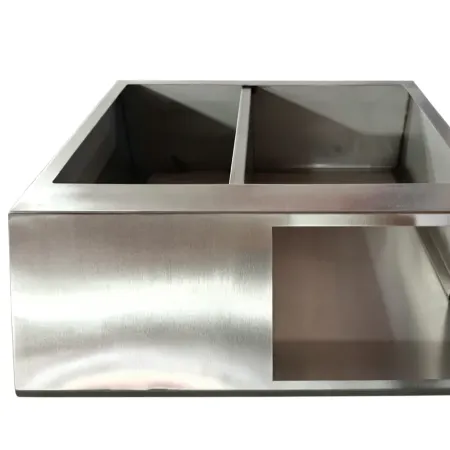
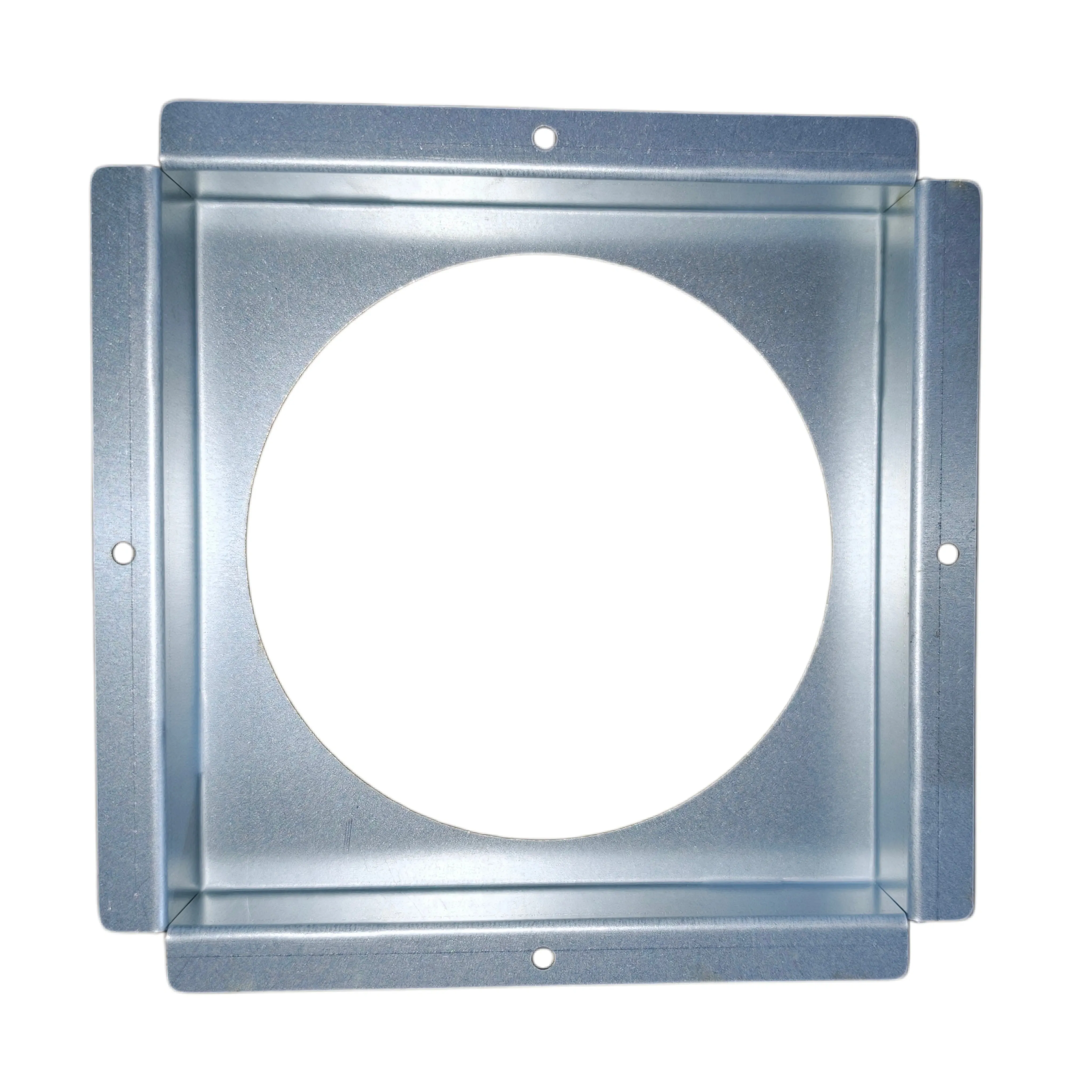
Founded in 2016, Zhongshan Juduo Hardware Products Co., Ltd. specializes in build-to-print metal stamping and sheet metal fabrication. We manufacture equipment housings, metal cabinets, structural assemblies, and stamped components according to customers’ drawings, samples, and technical requirements.
Led by a founder with more than 20 years of industry experience, our team supports tooling development, prototyping, small-batch production, and repeat orders. We work with customers to review materials, dimensions, tooling, and manufacturing requirements before production, helping balance manufacturability, quality, and cost. Surface finishing can also be coordinated through our qualified production partners.
Custom Sheet Metal Fabrication: One Term, Three Different Jobs
Two buyers ask for custom sheet metal fabrication. One sends a fully dimensioned drawing and expects parts back. The other sends a worn bracket in a plastic bag and expects the same. A third has a sketch of an idea and no dimensions at all. All three are asking for the same service by name, and none of them is buying the same thing.
One Term, Three Different Jobs
The first job is manufacturing. The design is finished, the drawing is authoritative, and the work is to reproduce it accurately at the required quantity. Almost all of the effort is process: nesting, programming, forming, welding, finishing, inspection.
The second is reconstruction. There is a physical part but no reliable document, so the first task is engineering — measuring, deciding which features are functional and which are artefacts of how the original was made, then producing a drawing that later orders can be built against. The manufacturing that follows is usually the easier half.
The third is design and build. There is a requirement but no geometry: an enclosure that has to hold a particular board and survive a particular environment, a frame that has to carry a particular load. This one involves proposals, samples and iterations before a production drawing exists at all.
The reason the distinction matters commercially is that the three jobs carry different risk and different cost structures. A quote for the first is mostly machine time and material. A quote for the second includes measurement and drawing work that has nothing to do with the press brake. A quote for the third includes engineering time spread over a longer schedule. Comparing them as if they were alternatives produces a decision that looks like a saving and is actually a change of scope.
Matching the Input to the Route: Drawing, Sample or Requirement
A single question sorts most enquiries: what do you already have? The answer determines the route, the schedule and, more often than people expect, the price.
A complete drawing or model. The route is direct. What matters is that one file is named as authoritative and that material, thickness, finish and critical dimensions are stated on it. Where a model and a drawing disagree, the disagreement is resolved before manufacturing rather than at inspection.
A physical sample. The route starts with measurement and a drawing. The questions worth settling early are which dimensions actually function, whether the sample represents the current design or an older one, and which material it is — a sample alone rarely identifies a grade with enough confidence to quote against.
A requirement only. The route starts with a design conversation. This is the case where a fabricator's experience is worth the most, because the choices that determine cost are still open: how the part is split, how it is joined, which faces are visible and how it is assembled.
Being honest about which of the three applies is worth more than a better drawing. A project described as "just make this part" that actually needs design work will lose a week to clarification, and the week will be blamed on the supplier's speed.
Batch Size Changes the Route More Than the Part Does
The same geometry can be made three different ways depending on how many are needed, and the choice is not a matter of preference.
One or a few. No tooling, programming dominates, and the cost is mostly setup. A laser and a press brake are the right tools because they need nothing built before the first part. Revisions are nearly free, which makes this the natural route for prototypes even when the production route will be different.
Hundreds to low thousands. Setup is amortised, so the work shifts toward reducing handling: nesting parts together, batching operations, and forming without re-fixturing. This is where a job can be made noticeably cheaper by how it is scheduled rather than by how it is designed.
High volume. Tooling becomes economic and the process changes character. A die collapses many operations into one stroke, and the per-part cost drops — but the flexibility drops with it, because the geometry is now cut into steel.
The middle band is where most expensive mistakes live. A job that is expected to grow is often tooled too early, and a job that has grown is often left on a programmable route for a year because nobody revisited the arithmetic. A useful habit is to ask, once a year, which of the three bands each part is now in.
Where the Money Goes: Setup, Material, Labour, Rework
Custom fabrication prices are built from four blocks, and understanding them makes a quotation readable rather than mysterious.
Setup. Programming, tooling selection, first-piece proving and inspection planning. This is a fixed cost per order and per revision, which is why a small order for a complex part costs more per unit than the same part in a large order.
Material. Priced by grade, thickness and how efficiently the part nests. This is the block most sensitive to decisions the buyer controls, because grade and thickness are usually specified rather than chosen by the shop.
Labour and machine time. Cutting, forming, welding, dressing and finishing. Every additional operation on a drawing adds here, which is why a part with six bends costs more than one with two even when the cut length is identical.
Rework and inspection. Usually the smallest line and the one that grows fastest when a drawing is ambiguous. A part that needs a clarification mid-run consumes engineering time, may be re-made, and delays everything behind it.
When a price looks high, the useful question is which block is carrying it. When a price looks low, the same question applies — it is usually one of the four that has been assumed rather than calculated.
The Capabilities That Must Sit Under One Roof
Fabrication can be assembled from subcontractors: one shop cuts, another forms, a third welds, a fourth finishes. It can work, and it carries a specific cost that is rarely itemised — every handover adds transport, a queue, a second inspection and a place for responsibility to become unclear.
Keeping the main operations together shortens the tolerance chain, because the shop that forms the part also knows how it will be welded. It also makes a schedule honest, since the lead time is not the sum of four companies' promises. The trade-off is that no single facility is best at everything, which is why the boundary of what is done outside should be known rather than assumed.
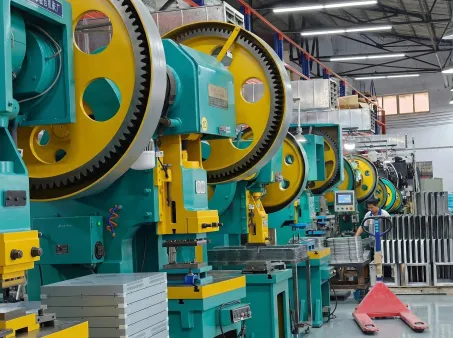
Our own boundary is fairly wide: laser cutting at 3000W and 800W, a CNC turret punch press, a press line from 40T to 250T, seven press brakes, polishing, riveting, robotic and manual welding, and assembly. That covers custom fabrication covering both stamped and formed work, including the secondary operations that usually cause a delay when they are sent out.
It is still worth asking any supplier what they do not do in-house. The answer is not a weakness; it tells you where the extra weeks can appear. The production floor and its equipment are a reasonable subject for a video call before a first order, and the conversation usually surfaces more than a capability list would.
How to Compare Two Quotes That Look Nothing Alike
Most price comparisons are decided by the total at the bottom, which is the least informative number on the page. Five alignments make them meaningful.
Material and thickness, stated rather than implied. Process route, including whether tooling is charged separately and who owns it. Inspection scope, since a full dimensional report and a visual check are different products. Finish and packing, because both are frequently excluded from a headline price. And what is included in the lead time — first article approval, finishing, transport, documentation.
A quotation that answers those five is comparable. One that does not is a number, and the difference between two numbers is not a saving until the scopes are known to be identical.
Conclusion
Custom sheet metal fabrication is not one service with one price. It is manufacturing, reconstruction or design-and-build depending on what the buyer brings, and the batch size changes the route on top of that. Naming the job correctly at the start is worth more than any negotiation later, because it makes the quotation describe the work that will actually happen.
The practical checklist is short: say what you have, say how many, say what the part has to do, and ask any supplier to break the price into setup, material, labour and inspection. Everything else in the conversation follows from those four answers.
Frequently Asked Questions
Can you take over a part another supplier currently makes?
Yes, and the work begins with establishing which document governs. If a drawing exists, it is reviewed against a sample of the current part. If it does not, the sample is measured and a drawing is produced. Either way, differences between the drawing and the part in service are listed before production rather than discovered afterwards.
Do you do finishing and assembly as well as cutting and forming?
Yes. Deburring, polishing, surface preparation, riveting, tapping, welding and assembly are carried out alongside the cutting and forming, which means a part can arrive finished rather than as a blank with operations still to be arranged. Where a finish is applied outside, that is stated before the order.
How do you handle a design that is not finished yet?
By separating the parts of the design that are settled from the parts that are still moving, and building a sample around the settled interfaces. That way the first physical part answers the open questions without committing tooling or a large batch to geometry that may change. The production drawing is written once the answers exist.
What files can you accept?
PDF drawings, STEP, IGS, DXF and DWG files up to 10MB, plus physical samples or dimensioned sketches. A PDF with critical dimensions marked is often more useful than a perfect model with nothing indicated, because the markings say what must hold in production. Where several files describe the same part, one of them should be named as the governing revision.
Tell us which of the three jobs this is
Describe the Job Before the DrawingPDF, STEP, IGS, DXF or PNG | Route and batch reviewed together | Feedback within 24 hours
User Reviews
What users say about Juduo
Frequently Asked Question
Do you have any question?
Build to print is one case of custom fabrication, the one where the drawing is complete and the supplier is not asked to change the design. Custom fabrication is the wider term and covers three starting points: a drawing, a physical sample, or a functional requirement that still needs a design. The practical difference is where the design responsibility sits and how much of the work happens before the first cut.
Yes. The sample is measured, the critical dimensions are recorded and a drawing is produced so that later orders have a document to build against rather than an object to copy. Where the sample has been modified over the years, the differences are listed before production, because a part that has been adapted on site is often not the shape its original drawing describes.
More than the geometry does. A single part is cut and formed with no tooling because setup dominates the cost. A few hundred may still be cheaper that way. At higher volumes the balance shifts toward a die, where the setup cost is paid once and the per-part time collapses. The crossover depends on how much work each part needs, so it is calculated per part rather than assumed from a quantity band.
Usually because the two quotes describe different scopes. One may assume material of a different grade or thickness, a different surface finish, a lighter inspection plan, a different packing method, or a different process route with a different amount of tooling. Asking which line differs is more productive than asking for a discount, because the answer usually explains the gap without anyone being dishonest.
Our updates and blog posts
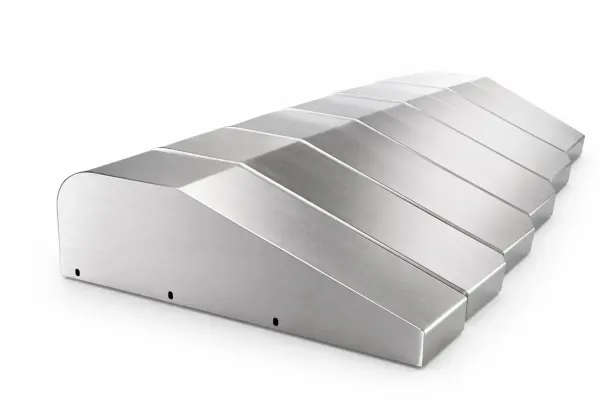
Aluminum Sheet Metal Parts: What Changes When the Drawing Says Aluminum
Aluminum sheet metal parts need a different bend radius, weld preparation, handling rule and finishing route. What to specify before you send the drawing.
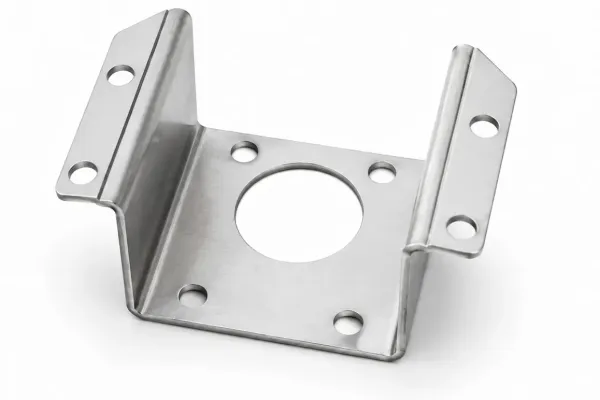
How Sheet Metal Lead Times Are Built, and Where the Days Go
Sheet metal fabrication lead time is a chain of material, queues, finishing and inspection decisions. Where the days go, and what buyers can control.
How to Choose Sheet Metal Material: Five Options and the Questions That Separate Them
How to choose sheet metal material depends on environment, process and finish, not strength. Compare stainless, carbon, galvanized, cold-rolled and aluminum.