
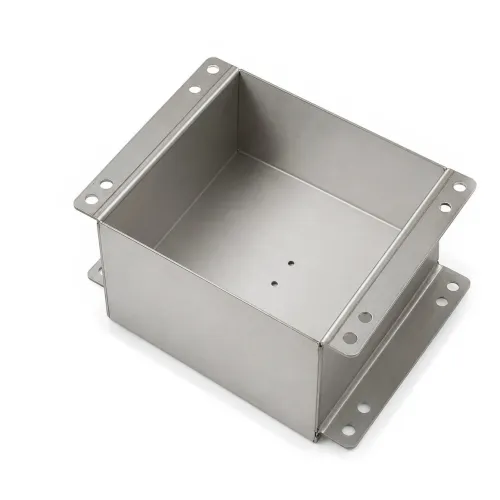
Features
Why Choose Juduo?
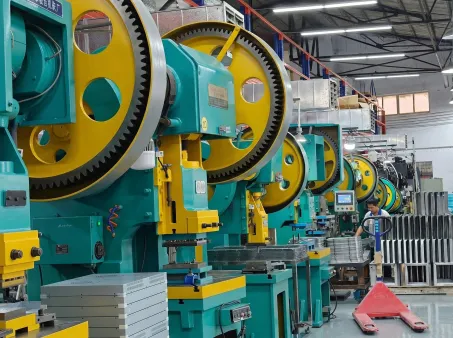
Every Process Under One Roof
From laser cutting and CNC turret punching to stamping, bending, robotic welding, riveting, tapping and polishing, every operation runs inside our own 5,000 m² facility on more than 50 machines. Nothing leaves the building between steps, so one part number stays under one responsibility from raw sheet to finished assembly — no handovers, no gaps to argue about.
Not Every Part Needs a Die
Laser cutting and turret punching work with standard tooling, so prototypes, small batches and late design revisions carry no tooling cost at all. We propose a die only when the quantity and the geometry make it the cheaper route — and we tell you which side of that line your part sits on before you commit.
Checked at Five Points, Not at the End
Incoming material, first piece, in-process, assembly fit and pre-dispatch are each checked separately under an ISO 9001:2015 system, with stamping pass rates running at 99.8%. The reason for checking early is simple: a problem found at first piece costs one part, while the same problem found at dispatch costs the whole batch.
A Drawing, a Sample or a Photograph Is Enough to Start
Send PDF, STEP, IGS, DXF or PNG files, or send the part itself. Where no drawing exists, we design and manufacture to your requirement, then move from approved sample to small batch and repeat production. Every enquiry is answered within 24 hours.
We Have The Best Solutions for Your Business
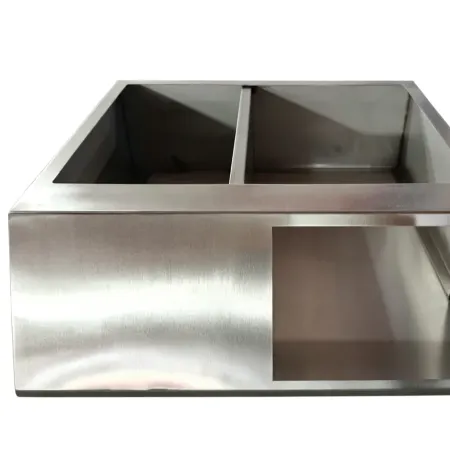
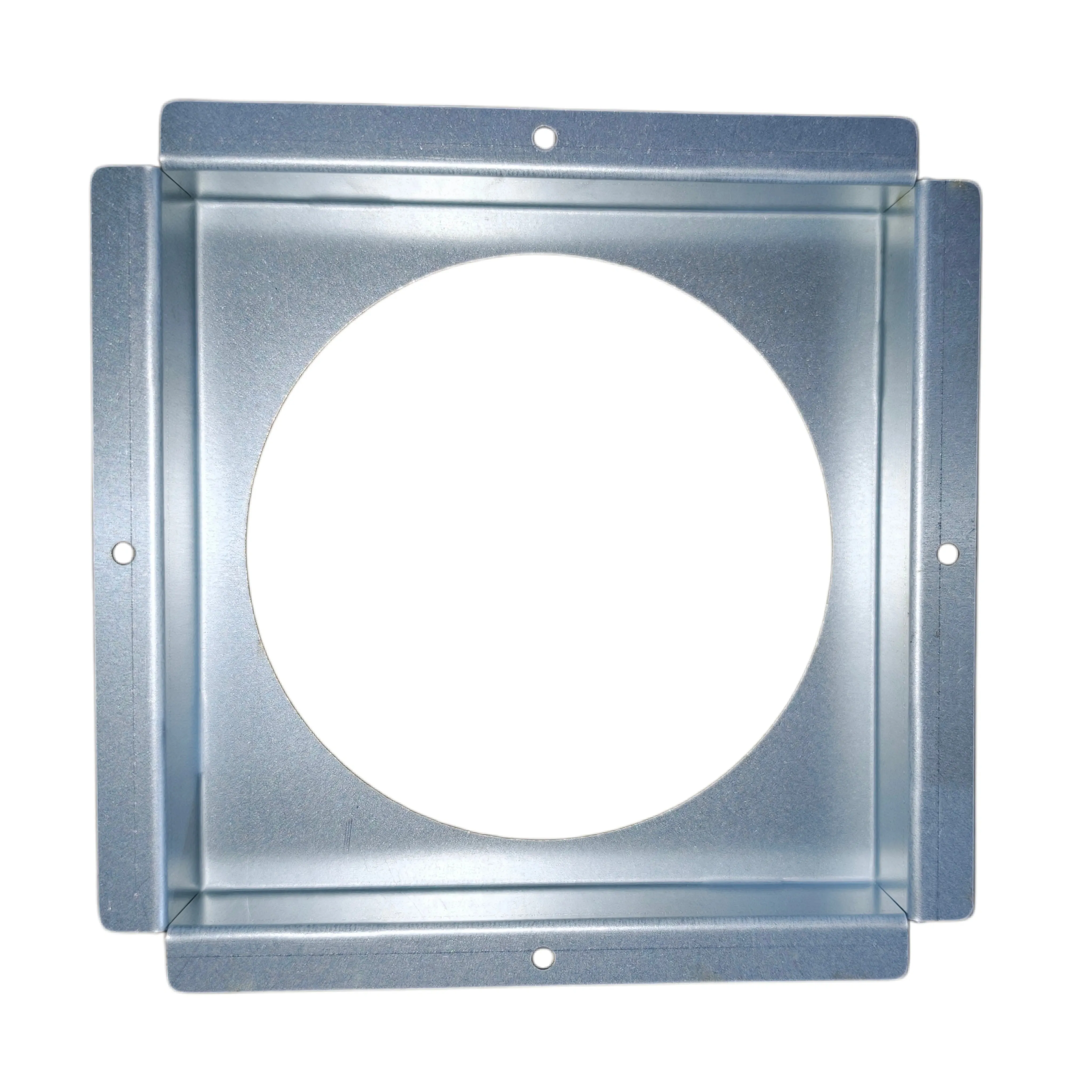
Founded in 2016, Zhongshan Juduo Hardware Products Co., Ltd. specializes in build-to-print metal stamping and sheet metal fabrication. We manufacture equipment housings, metal cabinets, structural assemblies, and stamped components according to customers’ drawings, samples, and technical requirements.
Led by a founder with more than 20 years of industry experience, our team supports tooling development, prototyping, small-batch production, and repeat orders. We work with customers to review materials, dimensions, tooling, and manufacturing requirements before production, helping balance manufacturability, quality, and cost. Surface finishing can also be coordinated through our qualified production partners.
Build to Print Sheet Metal Fabrication: What the Model Assumes About You
Almost every build-to-print enquiry opens the same way: here are our drawings, please make the parts. It sounds like the simplest arrangement in manufacturing, and in one sense it is — you keep the design, we keep the machines. What the sentence does not mention is that four decisions stay on your side of the table no matter how capable the supplier is, and projects rarely fail because a shop could not form a part. They fail because nobody on the buying side was assigned those four decisions, and the first time anyone notices is when a batch arrives that meets the drawing and still does not fit.
One Sentence, and the Responsibility It Quietly Passes Back
Build to print sheet metal fabrication is a manufacturing arrangement in which the customer supplies the definition and the manufacturer supplies the execution. The definition is a drawing, a CAD model, a dimensioned sketch or a physical sample. The execution is everything that turns that definition into parts: process selection, tooling or programming, forming, joining, finishing and inspection.
The line between the two is worth stating plainly, because it is where most misunderstandings start. We are responsible for making what the file describes, and for telling you when the file describes something that cannot be made as drawn. We are not responsible for deciding what the part should be. If a bracket is designed with a bend relief that leaves too little material, we will say so — but the decision to change the geometry is yours, and it stays yours even when we recommend the change.
That is not a limitation of the model; it is the point of it. Buyers choose build to print precisely because they do not want a supplier redesigning their product. The trade is that the quality of the outcome depends on the quality of the definition, and the definition is a document you write, not a service you buy.
Four Decisions the Buyer Cannot Delegate
In practice, four questions come up on nearly every project. Each has a correct answer, and none of them can be answered by the shop without your authority.
Which file governs. A PDF drawing, a STEP model, a DXF flat pattern and a physical sample can all arrive in the same email, and they rarely agree in every detail. The supplier has to pick one to build to. If you do not name it, the pick will be made by whoever opens the folder first, which is not a decision process. One sentence fixes it: dimensions per the PDF revision B, model for reference only.
Material and thickness. "Stainless steel" is a family, not a specification, and the same drawing made in two grades behaves differently under the same bend. Thickness matters even more quietly: a 0.2 mm difference changes the bend allowance, the flat pattern and sometimes the tooling. Both belong on the drawing, and neither can be inferred from a sample with confidence.
What acceptance means. A drawing with a general tolerance block technically defines every dimension, which means every dimension can be argued about. Most experienced buyers instead nominate the dimensions that matter for fit and function, define which surfaces are visible, and let the rest sit inside the general block. Deciding this before production is cheap; deciding it during a dispute is not.
When change stops being free. Every project has a point after which a revision costs tooling, fixtures or work in progress. On our side that point is the approval of the quotation and technical confirmation, before tooling and fixtures are prepared. Knowing where it sits lets you sequence your own engineering decisions around it instead of discovering it afterwards.
The common thread is that all four are definition decisions, and definition is what the customer kept when they chose this model. Delegating them to the supplier is possible, but then the arrangement is no longer build to print — it is design support with a manufacturing invoice.
Three Ways a Buyer Can Get the Part Made
Build to print is one of three arrangements that look similar from the outside and behave very differently inside a project. The right choice depends on what you already have in hand.
You have a drawing and a settled design. This is the classic case. The file is complete enough to be built from, the open questions are details rather than structure, and what you need is capacity plus consistency. Tooling can be developed from the approved geometry, and repeat orders can be checked against the same revision.
You have a part but no drawing. Legacy components, spare parts from a discontinued line, a competitor's bracket that has to be replaced. Here the first task is producing a reference — measuring the sample and turning it into a drawing that later orders can be built to. The manufacturing is straightforward; the reconstruction is the work, and it should be treated as engineering rather than as a quick copy.
You have a function but no design. You know the enclosure has to hold a control board and survive washdown, but the geometry is open. That is a route where design is part of the scope, and it is a different conversation: sketches, material advice, sample iterations and a design that you then own. It is not better or worse than build to print — it is simply a different starting point, and confusing the two is what makes quotes hard to compare.
What Has to Be True Before a Drawing Becomes a Part
A drawing is a set of intentions, and four things have to be true before those intentions survive contact with a workshop.
The geometry has to unfold. Every sheet metal part is cut flat and folded back into shape, which means the flat pattern is the real manufacturing document. Corners without relief, bends that collide with an existing flange, a hem too close to a bend line — these are not drawing errors, they are forming constraints, and they show up as soon as someone tries to sequence the bends.
The material has to be obtainable. We work in stainless steel, carbon steel, galvanized steel, cold-rolled steel and aluminum. Within those families, the exact grade and thickness determine availability and lead time. A grade specified because it was used in a European design is not always stocked in the thickness the part needs, and the substitution question is best asked before the quote rather than after the order.
The equipment has to reach it. Our press line runs 40T to 250T, with laser cutting at 3000W and 800W, a CNC turret punch press, seven press brakes, polishing, riveting and robotic welding. That covers a wide band of part sizes and thicknesses, but not every band. A part that needs a 400T press or a 6 m bend is not a quality problem, it is a capacity boundary, and it is better to know at quotation than at first article.
The result has to be measurable. If a dimension cannot be reached by the inspection equipment on the floor, it cannot be certified. This is why the acceptance discussion in the previous section matters: nominating measurable critical dimensions gives the inspection plan something to hold, and gives you the inspection points behind that signature on the certificate.
Where a Build-to-Print Project Loses Time
When a project runs late, the delay is almost never in the cutting and bending. Machine time is visible and therefore managed. The lost weeks sit in three quieter places, and each can be planned around.
Waiting for one answer. A single missing dimension can hold a whole package while two people exchange emails about it. The fix is unglamorous: review the drawing before sending it, and mark anything you are unsure about rather than leaving it to be discovered. A drawing with three flagged questions moves faster than a perfect-looking one with three silent gaps.
Waiting for material. Standard thicknesses in the five material families are usually on hand or quickly sourced. An unusual grade, a special width or a mill finish requirement can add weeks that no amount of shop-floor effort recovers. If the grade is fixed by a standard, say so early; if it is negotiable, say that too, and an equivalent can often be proposed.
Waiting for a signature. First-piece approval is a buyer-side activity, and it competes with everything else on your desk. The pattern that works is to name the approver and the acceptance criteria before production starts, so the sample arrives to a decision that is already framed. Without that, a part can sit approved-in-principle for a fortnight while the line waits.
None of these are manufacturing problems, which is why adding supplier capacity rarely fixes them. They are handoff problems, and the handoffs are in your building.
When Build to Print Is the Wrong Choice
The model is durable because it is narrow, and it is worth being honest about where it stops being the right answer.
It is a poor fit when the design is still moving. If the geometry changes every fortnight, a programmable route — laser, turret punch, press brake — will absorb the revisions at almost no cost, while a project already committed to tooling will not. Build to print assumes the definition is stable enough to build against; when it is not, the honest answer is to sample first and commit later.
It is a poor fit when the problem is still an engineering problem. A housing that overheats, a bracket that fatigues, an assembly that takes too long to fit on your line — these need someone to propose a change in structure, and that is a different service. The same applies to one-off replacements, where the effort sits in reconstructing a reference rather than in manufacturing to one.
And it is a poor fit for buyers who want to hand over a folder and disengage. The model does not remove the need for a decision-maker on your side; it concentrates that need into a few specific moments. Where those moments are handled, build to print is the most predictable way to buy metal parts that exists. Where they are not, the same model produces the same frustrating outcome at every supplier, which is usually the sign that the arrangement — not the vendor — needs reviewing.
Conclusion
What you buy in build to print sheet metal fabrication is execution, not judgement. The supplier can tell you that a bend will crack, that a tolerance is tighter than the process holds, or that a die would pay for itself at your volume — but the decision about what the part is remains with the person who owns the drawing. Projects that go smoothly are not the ones with the most detailed files; they are the ones where somebody on the buying side stayed engaged long enough to answer four questions once, at the start.
That is also the practical test of a supplier. A shop that only says yes to a package is not adding much beyond machine time. A shop that reads the file, names what is missing and explains the consequence before quoting is doing the part of the job the model leaves open — and that difference shows up long before the first stamped parts built around a settled design reach your assembly line.
Frequently Asked Questions
What happens if my drawing is missing a dimension?
We raise it during the technical review rather than filling the gap ourselves. Depending on the feature, the missing value may be inferred from a mating part, taken from the model, or left for you to confirm. What we do not do is guess silently and build to the guess, because a part made to an invented dimension passes inspection and still fails in assembly.
Do I have to approve a sample before the first production run?
Where the project includes a sample or first article, yes. The approval confirms that the geometry, material, finish and fit meet the drawing as interpreted, and it becomes the reference for the run that follows. On parts with no tooling, the first piece from the production batch serves the same purpose, so the checkpoint exists either way.
How do you handle a part that another supplier has made for years?
We start from whatever is authoritative — the original drawing if it exists, otherwise a measured sample converted into a drawing. Where the sample has been quietly modified over the years, the differences are listed before production so you can decide whether the sample or the drawing represents the part you actually want. That decision is recorded, and later orders are made to it.
How do you confirm that what ships conforms to the file we sent?
Parts are checked against the approved revision at first piece, during production and before packing, with the inspection scope set by part complexity, process, quantity and your requirements. Records from those checks travel with the shipment, so a later question about a specific batch can be answered from documentation rather than from memory.
Have a drawing that is ready to build?
Send a Drawing for ReviewPDF, STEP, IGS, DXF or PNG | Read against your revision | Questions raised before quoting
User Reviews
What users say about Juduo
Frequently Asked Question
Do you have any question?
Build to print means the customer owns the definition and the manufacturer owns the execution. You supply a drawing, a CAD model, a dimensioned sketch or a physical sample; we build the part exactly to that reference and do not redesign it. The material, thickness, tolerances, finish and acceptance criteria all come from your file, which is also what the finished part is measured against. The model suits buyers whose design is already settled and who want manufacturing capacity rather than design input, and it works best when one document is clearly named as the governing revision.
A drawing or model plus four pieces of information that drawings often leave out: material and thickness, order quantity, surface finish, and which faces are visible in the finished product. Files can be PDF, STEP, IGS, DXF or PNG up to 10MB, and a dimensioned sketch or a photo with measurements works as a starting point if no drawing exists yet. If something needed for pricing is missing, we ask before quoting rather than assuming, because an assumption that later turns out wrong changes both price and lead time.
Yes, and it usually is — but the process behind it changes. A prototype or small batch is normally cut on a laser or turret punch and formed on a press brake, with no tooling to pay for and revisions costing little. At higher volumes the same geometry may move to a stamping die, which changes the setup, the inspection plan and the first-piece approval. The drawing stays the same; what has to be re-confirmed is that the production process still delivers it, which is why a sample from one route does not automatically approve the other.
Four cases stand out. Designs still in flux, where changes arrive weekly and programmable cutting and bending will always be faster than a die. Parts that need the manufacturer to solve a structural or assembly problem, which is a design-and-build arrangement rather than build to print. One-off repair or replacement parts, where the effort goes into reconstructing a reference rather than manufacturing to one. And projects where the buyer expects to hand over a file and hear nothing until delivery — the model transfers responsibility for the definition to you, so it still requires someone on your side to answer questions when they arise.
Our updates and blog posts
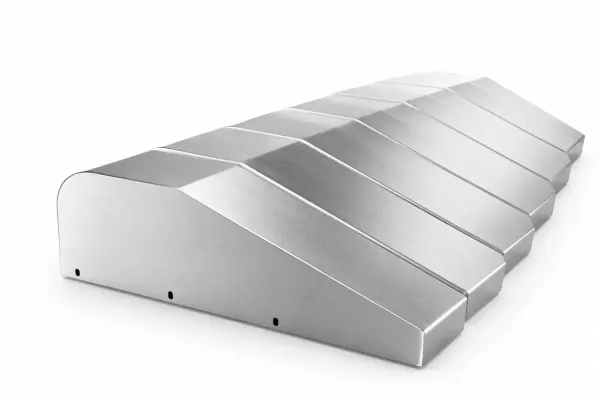
Aluminum Sheet Metal Parts: What Changes When the Drawing Says Aluminum
Aluminum sheet metal parts need a different bend radius, weld preparation, handling rule and finishing route. What to specify before you send the drawing.
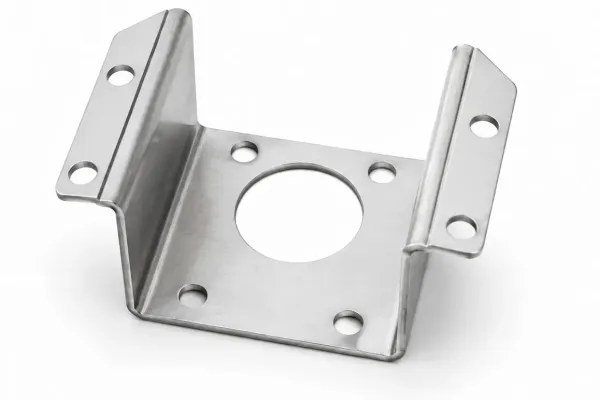
How Sheet Metal Lead Times Are Built, and Where the Days Go
Sheet metal fabrication lead time is a chain of material, queues, finishing and inspection decisions. Where the days go, and what buyers can control.
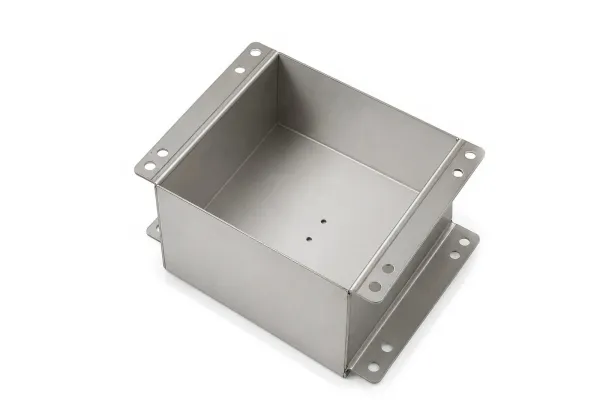
How to Choose Sheet Metal Material: Five Options and the Questions That Separate Them
How to choose sheet metal material depends on environment, process and finish, not strength. Compare stainless, carbon, galvanized, cold-rolled and aluminum.