
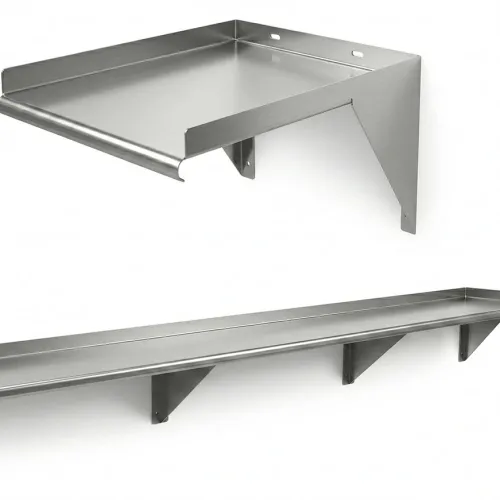
Features
Why Choose Juduo?
Every Process Under One Roof
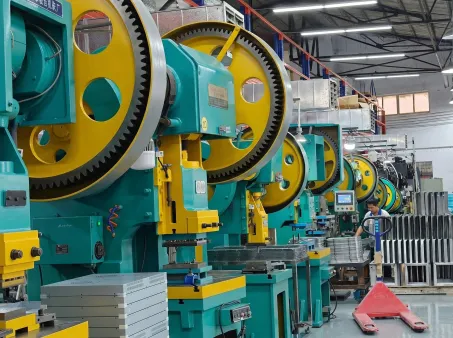
From laser cutting and CNC turret punching to stamping, bending, robotic welding, riveting, tapping and polishing, every operation runs inside our own 5,000 m² facility on more than 50 machines. Nothing leaves the building between steps, so one part number stays under one responsibility from raw sheet to finished assembly — no handovers, no gaps to argue about.
Not Every Part Needs a Die
Laser cutting and turret punching work with standard tooling, so prototypes, small batches and late design revisions carry no tooling cost at all. We propose a die only when the quantity and the geometry make it the cheaper route — and we tell you which side of that line your part sits on before you commit.
Checked at Five Points, Not at the End
Incoming material, first piece, in-process, assembly fit and pre-dispatch are each checked separately under an ISO 9001:2015 system, with stamping pass rates running at 99.8%. The reason for checking early is simple: a problem found at first piece costs one part, while the same problem found at dispatch costs the whole batch.
A Drawing, a Sample or a Photograph Is Enough to Start
Send PDF, STEP, IGS, DXF or PNG files, or send the part itself. Where no drawing exists, we design and manufacture to your requirement, then move from approved sample to small batch and repeat production. Every enquiry is answered within 24 hours.
We Have The Best Solutions for Your Business
Founded in 2016, Zhongshan Juduo Hardware Products Co., Ltd. specializes in build-to-print metal stamping and sheet metal fabrication. We manufacture equipment housings, metal cabinets, structural assemblies, and stamped components according to customers’ drawings, samples, and technical requirements.
Led by a founder with more than 20 years of industry experience, our team supports tooling development, prototyping, small-batch production, and repeat orders. We work with customers to review materials, dimensions, tooling, and manufacturing requirements before production, helping balance manufacturability, quality, and cost. Surface finishing can also be coordinated through our qualified production partners.
Custom Sheet Metal Brackets: The Part That Owns No Datum
Every other part on a machine defines itself. A housing has an outline, a panel has a face, a shaft has an axis. A bracket has none of these things. Its geometry only means something relative to the two parts it connects, and neither of those parts is drawn on its drawing. That is why brackets generate more fitting complaints per pound of steel than any other sheet metal component, and why the useful review happens before the blank is nested.
A Bracket Owns No Datum
In geometric terms, a bracket is a transfer function. It takes a position and orientation from a mounting surface and delivers another position and orientation to whatever it carries. Both ends of that transfer belong to other parts, and the tolerances at both ends accumulate through the bracket without anywhere to go.
The practical consequence is that a bracket drawing is a partial document. It can describe the material, the thickness, the hole pattern and the bend angles, but it cannot describe whether the assembly closes. A supplier who builds strictly to the bracket drawing has done the job correctly and may still deliver a part that will not fit — and that is not a manufacturing failure, it is a gap in the definition.
Experienced buyers handle this by nominating which dimensions are functional before the bracket is quoted. Usually that is three or four values: the distance between the two mounting patterns, the angle between them, and the height that sets the carried part's position. Everything else can sit in a general tolerance without consequence.
Reading the Two Interfaces Before the Bracket Itself
When we review a bracket, the first thing we look at is not the bracket. It is what the bracket touches at each end.
The mounting interface decides hole positions, fastener access and how flat the bracket's foot has to be. A foot that is bolted to a welded frame inherits that frame's distortion, so a bracket designed as if it sits on a machined surface will rock. A foot fixed with two fasteners on a diagonal will rotate under load unless something else locates it.
The carried interface decides the angle, the offset and the load path. This is where stiffness matters, because the bracket is usually the longest unsupported span in the assembly. It is also where the direction of the load matters: a bracket loaded in the plane of its web is stiff, and the same bracket loaded across the web is a spring.
Sending the assembly view, or the two mating drawings with the bracket, is the cheapest thing a buyer can do. It costs a few minutes at the enquiry stage and it catches the cases where the bracket drawing is internally consistent but externally wrong.
Slotted Holes, Adjustment and the Cost of Getting It Right First Time
A slotted hole is a way of moving tolerance from the manufacturing stage to the assembly stage. It lets an installer absorb an error instead of returning a part, which is exactly what a first build or a retrofit needs.
It has costs that are worth stating. A slot provides adjustment in one direction only, and it provides movement in that direction forever unless the joint is designed to lock. Under vibration, a bolted slot can creep; under load, it can slip and lose alignment. The usual mitigations are a washer with a serrated face, a hardened plate, or a slot paired with a shoulder screw that bottoms in a round hole elsewhere on the same part.
Where the interface is fully defined, a round hole with a locating feature is the better design: it removes the adjustment, and with it the possibility of the bracket moving after commissioning. The judgement is simple. If an error is likely and its size is unknown, slot it. If the position is known and must stay, locate it.
Stiffness: The Failure That Passes Inspection
A bracket that deflects too much will pass every dimensional check it is given. Nothing on the drawing is out of tolerance, because the drawing never asked for a stiffness. The failure appears later as a sag, a rattle, a misalignment that grows with load, or a resonance that makes a panel buzz at a particular motor speed.
Stiffness in sheet metal comes from depth, not thickness. A flat bracket and a bracket with a formed flange of the same material behave completely differently, because the flange moves material away from the neutral axis. A joggle, a return, a swaged rib or a folded edge can multiply stiffness for a fraction of the weight and cost of a thicker sheet.
The supporting structure matters as much as the bracket. A stiff bracket bolted to a flexible panel is a flexible assembly, and a bracket designed to carry a load at its tip needs its fasteners spread far enough apart that the joint itself does not rotate. Where a bracket is expected to hold alignment rather than simply carry weight, the design should include a positive location — a dowel, a step, a machined face — rather than relying on friction between two painted surfaces.
Bend Allowance and Why Two Identical Angles Do Not Stack
When a bracket is formed, the material on the inside of the bend compresses and the material on the outside stretches. Somewhere between them is a neutral layer that keeps its length, and the position of that layer — usually expressed as a factor of the thickness — decides how much flat material a given bend consumes.
That factor is not constant. It changes with the material, the thickness, the bend radius, the tooling and the forming method. Two brackets bent to the same nominal angle from different materials will not have the same developed length, and a bracket with three bends accumulates the difference at each one. This is why a flat pattern generated with default settings can be consistently short or long across a whole batch, and why the first article matters more on a multi-bend bracket than on almost any other part.
The practical implication for a designer is that a bracket should be dimensioned in a way that survives this. Give the functional dimensions — the ones between holes and interfaces — and let the bend allowance be the manufacturer's calculation, because it depends on the tooling that will actually be used. Over-dimensioning every segment of a multi-bend part tends to create a drawing that cannot be satisfied by any single flat pattern.
What to Send With a Bracket Drawing
Six things make a bracket package complete, and none of them are unusual: where the bracket sits in the assembly, what it mounts to, what it carries, which direction the load comes from, which surfaces are visible, and whether it is installed once at the factory or repeatedly in the field.
That last point is often overlooked and it changes the design. A bracket fitted once during assembly can be tight, require a jig and take twenty minutes. A bracket fitted by a technician on site needs clearance, a single tool and an obvious orientation, which usually means slotted holes and a locating tab rather than a precise fit.
Where the position in the assembly is known, brackets cut and formed without tooling can be turned around quickly and revised without penalty, which makes the early iterations cheap. And because a bracket's dimensions only mean something in context, the quality checks applied to formed parts include the interface dimensions rather than only the part's own outline.
Conclusion
A bracket is the one sheet metal part that cannot be judged on its own. It inherits a datum from one side, hands another to the other side, and carries both tolerances in between. Making it well is a matter of cutting and bending; making it fit is a matter of knowing what it connects to.
So the useful move is not a tighter drawing. It is a drawing that names the three or four functional dimensions and comes with enough of the assembly to show what sits on either side. That single habit removes most of the iterations that brackets are famous for.
Frequently Asked Questions
Can a bracket be bent from thicker material to avoid a weld?
Often yes, and it is usually the better answer. A single piece bent from one blank avoids the distortion, inspection and finishing that a welded bracket needs, and it eliminates a joint that would otherwise collect moisture. The limit is the press brake's capacity and the bend radius the thickness requires; beyond that, a welded fabrication is the only route.
How do you check hole position after bending?
By measuring the functional relationships rather than the flat pattern: hole to hole across a bend, hole to mounting face, and the angle between the two interfaces. Checking the flat part alone confirms the cut was right and says nothing about what the bend did, which is why formed brackets are inspected in their formed state.
What causes a bracket to crack at the bend?
Too small a bend radius for the material, bending along the rolling direction on a hard or work-hardened grade, a burr left on the outside of the bend, or a hole placed too close to the bend line so the deformation pulls at it. All four are visible on a drawing before anything is cut, which is why the radius and hole spacing get checked at review.
Do you make one-off brackets?
Yes. Because laser cutting and press-brake forming need no tooling, a single bracket can be made economically, and a revision costs a new blank rather than a new die. For replacements and retrofits this is usually the fastest route, provided the mating interfaces are measured rather than assumed.
Send the bracket with what it touches
Send the Bracket and Its Mating PartsPDF, STEP, IGS, DXF or PNG | Both interfaces reviewed | Feedback within 24 hours
User Reviews
What users say about Juduo
Frequently Asked Question
Do you have any question?
Because a bracket is measured on its own but used between two other parts. Each of those parts carries its own tolerance, and the bracket sits at the end of both chains. A bracket that is inside every dimension on its drawing can still be outside the available space once the mating parts are at the opposite ends of their tolerance bands. The only way to avoid it is to know which dimensions close the chain and to control those specifically.
You can, and it is how most brackets are ordered. What you cannot get from a bracket drawing alone is confirmation that the part will fit, because the drawing describes the bracket and not the two things it connects. Sending a section of the assembly, or the two mating drawings, costs you nothing at the enquiry stage and removes the most common source of a second iteration.
Where the interface is not fully defined, yes — a slotted hole can absorb an error that a round hole turns into a rework. The trade-off is that a slot relies on the fastener tension to stay in position and needs a washer or a serrated flange to hold. On a bracket that carries load or sets an alignment, a round hole with a locating feature is usually better than a slot that invites movement.
Thickness is a stiffness decision before it is a strength decision. A thin bracket that is stiff enough in a straight pull can still flex sideways, and the deflection is what a user notices. Two ways to buy stiffness are a thicker sheet or a formed feature — a joggle, a flange or a return. The formed version is often lighter and cheaper, and it usually shows up in the flat pattern, so it needs to be decided before the drawing is released.
Our updates and blog posts
Aluminum Sheet Metal Parts: What Changes When the Drawing Says Aluminum
Aluminum sheet metal parts need a different bend radius, weld preparation, handling rule and finishing route. What to specify before you send the drawing.
How Sheet Metal Lead Times Are Built, and Where the Days Go
Sheet metal fabrication lead time is a chain of material, queues, finishing and inspection decisions. Where the days go, and what buyers can control.
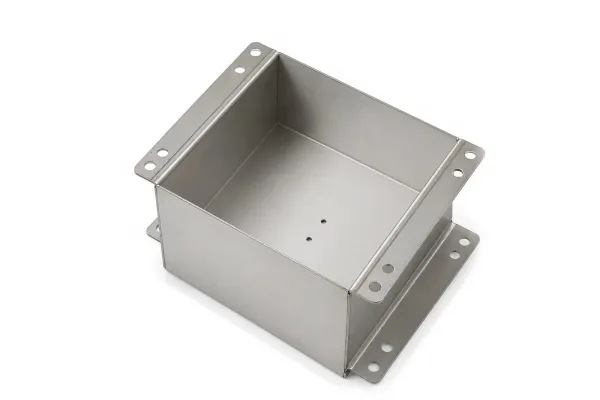
How to Choose Sheet Metal Material: Five Options and the Questions That Separate Them
How to choose sheet metal material depends on environment, process and finish, not strength. Compare stainless, carbon, galvanized, cold-rolled and aluminum.