
Features
Why Choose Juduo?
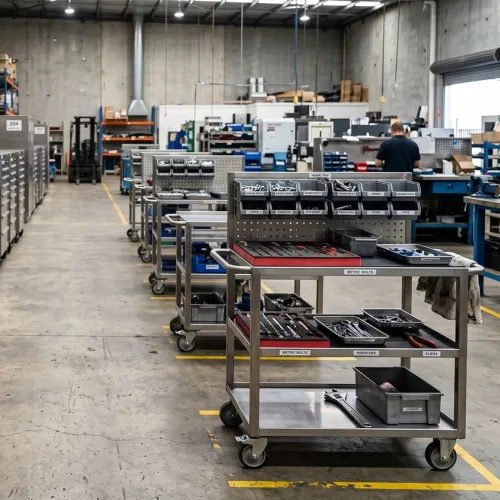
Every Process Under One Roof
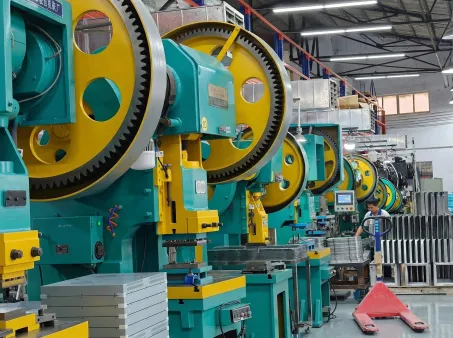
From laser cutting and CNC turret punching to stamping, bending, robotic welding, riveting, tapping and polishing, every operation runs inside our own 5,000 m² facility on more than 50 machines. Nothing leaves the building between steps, so one part number stays under one responsibility from raw sheet to finished assembly — no handovers, no gaps to argue about.
Not Every Part Needs a Die
Laser cutting and turret punching work with standard tooling, so prototypes, small batches and late design revisions carry no tooling cost at all. We propose a die only when the quantity and the geometry make it the cheaper route — and we tell you which side of that line your part sits on before you commit.
Checked at Five Points, Not at the End
Incoming material, first piece, in-process, assembly fit and pre-dispatch are each checked separately under an ISO 9001:2015 system, with stamping pass rates running at 99.8%. The reason for checking early is simple: a problem found at first piece costs one part, while the same problem found at dispatch costs the whole batch.
A Drawing, a Sample or a Photograph Is Enough to Start
Send PDF, STEP, IGS, DXF or PNG files, or send the part itself. Where no drawing exists, we design and manufacture to your requirement, then move from approved sample to small batch and repeat production. Every enquiry is answered within 24 hours.
We Have The Best Solutions for Your Business
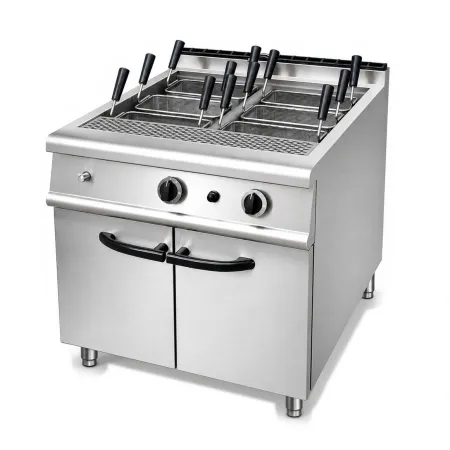
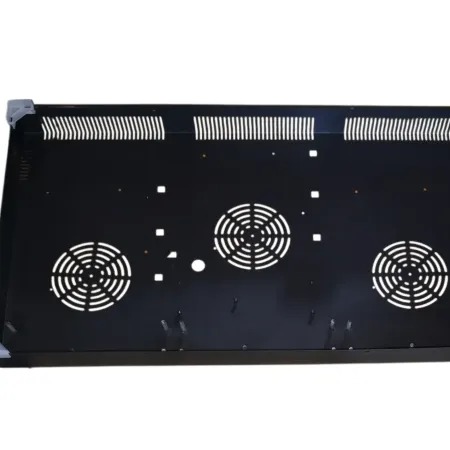
Founded in 2016, Zhongshan Juduo Hardware Products Co., Ltd. specializes in build-to-print metal stamping and sheet metal fabrication. We manufacture equipment housings, metal cabinets, structural assemblies, and stamped components according to customers’ drawings, samples, and technical requirements.
Led by a founder with more than 20 years of industry experience, our team supports tooling development, prototyping, small-batch production, and repeat orders. We work with customers to review materials, dimensions, tooling, and manufacturing requirements before production, helping balance manufacturability, quality, and cost. Surface finishing can also be coordinated through our qualified production partners.
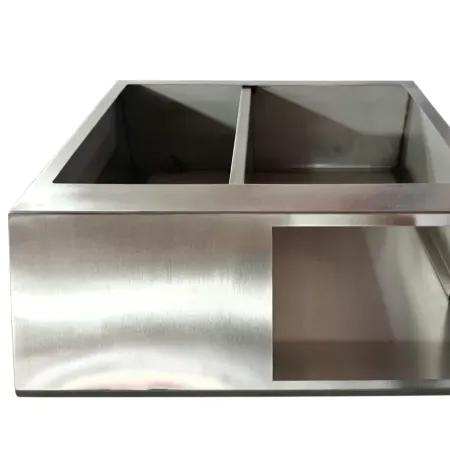
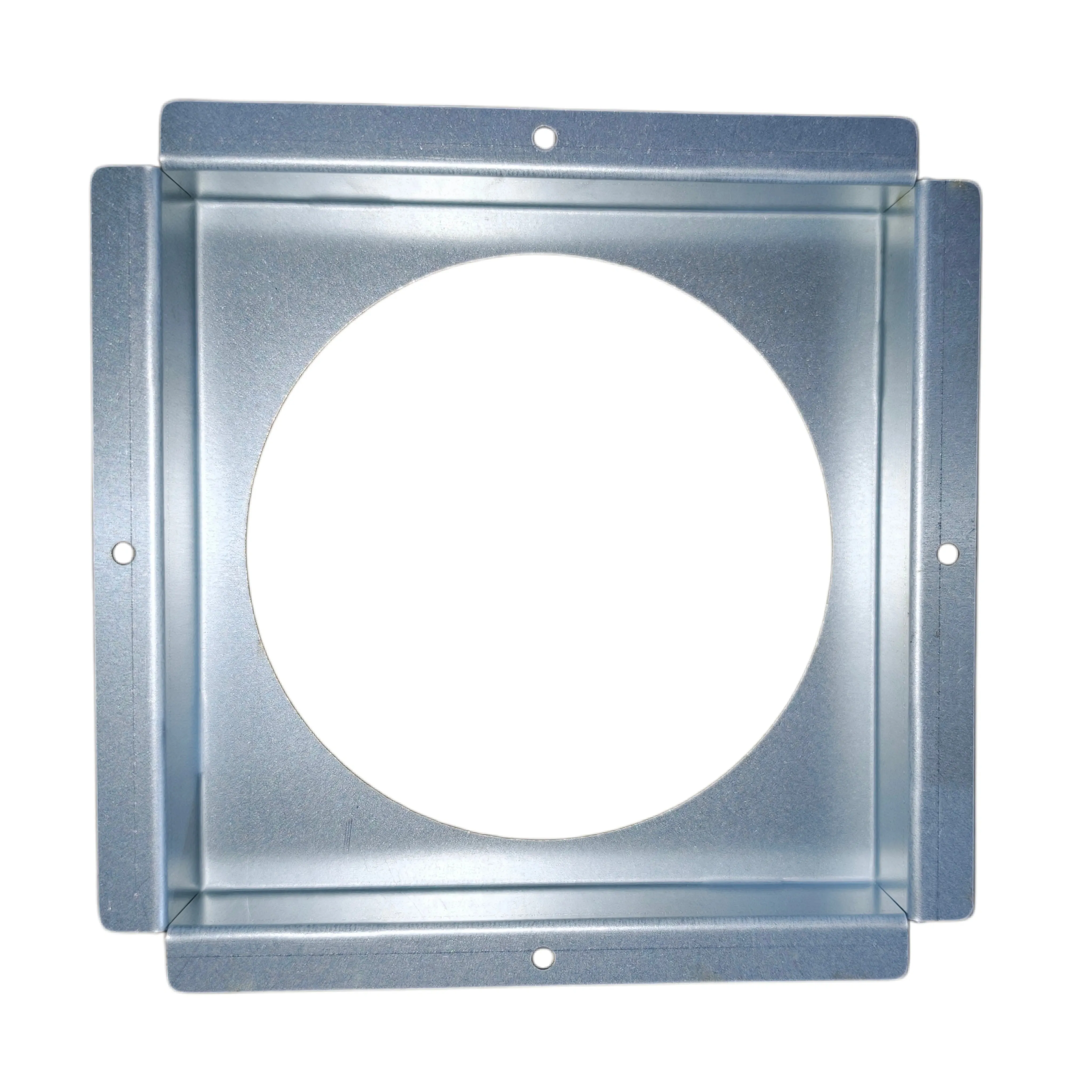
Custom Sheet Metal Enclosures: A Boundary With Three Authors
An enclosure drawing is usually produced by one person, in one department, against one set of requirements. The enclosure itself is then judged by three others: the engineer who has to fit components inside it, the technician who opens it in the rain, and the buyer who has to ship it without the lid bowing. When those three voices were not in the drawing, the part arrives geometrically correct and functionally wrong, which is the most expensive kind of wrong.
Three Parties Define an Enclosure, and Only One of Them Draws It
The first author is internal. Components set the usable volume, the mounting pattern, the connector positions and the heat load. Their requirements are dimensional and usually well understood, because the people who specify them are the people who drew them.
The second author is the environment, and it rarely has a representative in the room. Water arrives from above, from splash, from condensation and from the cable itself; dust arrives with air; heat leaves through whatever path exists. Each of these leaves a mark on the enclosure: a drip edge, a slope, a louvre orientation, a vent with a filter behind it, a gasket land wide enough to compress.
The third author is the line and the field. Someone has to assemble the unit, lift it, open it, and later service it. That produces requirements that look trivial on a drawing and are decisive in practice: a cover light enough to handle one-handed, a fastener that does not need two tools, a door that opens past ninety degrees so a connector can be reached.
The practical way to give all three a voice is a short written brief attached to the drawing. Three paragraphs are usually enough: what is inside, what it will be exposed to, and how it is opened. A fabricator can work with that; without it, the only voice is the one holding the CAD licence.
Internal Fit: Clearance, Access and the Parts That Arrive Later
Internal fit is not only about the components on the layout drawing. It is about the ones that arrive after the enclosure is designed — a wiring harness with a bend radius nobody planned, a fan added for thermal reasons, a label that has to be read from the front, a service loop that needs somewhere to sit.
Two clearances are worth reserving explicitly. The first is tool clearance: a fastener that can be reached by hand is not the same as one that can be reached with a driver, and a screw in a corner often cannot be turned at all. The second is removal clearance: many components are not installed by lowering them in, but by sliding them sideways off a rail, which needs space in a direction the drawing may not show.
Mounting plates deserve their own note. A plate welded to the enclosure fixes the positions of everything on it forever. A plate on standoffs, or a plate mounted to the back panel with a slot pattern, gives a small amount of adjustment that turns a tolerance problem into a two-minute alignment. On a first build, that adjustment is usually worth more than the rigidity it gives up.
Sealing, Drainage and Where Water Actually Goes
Sealing is often treated as a gasket problem. It is more usefully treated as a path problem, because water does not enter evenly — it follows gravity, capillary action and air pressure to a small number of weak points.
The top face is the first path. A flat lid with a seam collects water and holds it against the joint, so a formed upstand, a drip edge or a slight slope does more than a thicker gasket. The door is the second: a gasket only seals if the closing force is even around its whole length, which means the frame has to be stiff enough not to bow between latch points. Cable entries are the third, and they are discussed earlier — a gland on a vertical face with the cable dropping away from it behaves very differently from the same gland on the top.
Condensation is the one that catches people out, because it can form inside a perfectly sealed box. Equipment that cycles in temperature pulls moisture out of the air inside the enclosure. The remedies are a breather with a membrane, a drain at the lowest point, or enough internal volume that the temperature swing is gentler. Whichever is chosen, the enclosure needs a deliberate lowest point, which is a geometry decision made before the panels are formed.
Panel Thickness, Stiffness and the Cost of a Flat Lid
The instinct when an enclosure feels flimsy is to add thickness. It works, and it is usually the most expensive way to get the result, because the extra gauge is paid for on every panel, every fixing and every kilogram shipped.
Stiffness in a panel comes from its section, not its area. A flat lid of a given thickness deflects under load; the same lid with a turned-down flange around its edge behaves like a shallow tray and resists bending far more effectively. A pressed rib or a swage does the same locally. These are press-brake and stamping operations, they cost a fraction of a gauge increase, and they are decided at the drawing stage.
The flat lid is also where acoustic and drumming problems appear: a large unsupported panel will vibrate at some frequency, and the symptom is an audible buzz that no dimensional inspection predicts. Ribs break the panel into smaller areas and move that frequency upward, which is usually enough to solve it.
Prototype to Production: What Must Not Change
An enclosure that is prototyped on a laser and then produced from a die is still the same part only if certain things survive the change. The interface dimensions must, because they connect to the customer's world: mounting hole pattern, connector cutouts, overall envelope, seal land.
What may legitimately change is everything about how it is made: the cutting method, the bend sequence, the tooling, the batch handling and even the finish application, provided the finish specification is met. The distinction matters because buyers sometimes freeze the process instead of the interface, which removes the supplier's ability to choose the cheaper route, and sometimes freeze nothing at all, which is how a production unit stops fitting the prototype's bracket.
The first article is the bridge between those two states. It is the point where the production process proves it can deliver the interfaces the prototype defined, and it should be measured on those interfaces rather than on the overall shape.
Reviewing an Enclosure Drawing Before Anything Is Cut
Our review of an enclosure looks for six things, in this order: the internal envelope and the mounting pattern; the openings, and whether each one is sealed, drained or deliberately open; the material and thickness against the stiffness the part needs; the corners and joints, since these decide both strength and cleanability; the finish, including which faces are visible; and the assembly sequence, because a cover that cannot be fitted after the internals are in is a design fault, not a build fault.
This is not a slow process, and it is not an attempt to redesign the product. It is the cheapest opportunity to notice that an enclosure has three authors. Enclosures formed, welded and finished as one assembly are built from a drawing that has already answered those questions.
Where the enclosure carries a stated environmental requirement, the review also sets what will be checked and how. The inspection plan set for each enclosure reflects that requirement — gasket lands, seal continuity, door closing force — rather than a generic dimensional list.
Conclusion
An enclosure is the only part of a machine that has to satisfy everyone who never speaks to each other: the engineer inside, the weather outside and the technician with a screwdriver. The drawing can carry all three, but only if someone writes them down.
Practically, that means three paragraphs attached to the model, a decision about where water goes, and a formed edge instead of an extra millimetre of thickness. None of these cost much at the drawing stage. All of them are expensive to add once the enclosure exists.
Frequently Asked Questions
Can the enclosure be opened without tools?
It can, with quarter-turn latches, captive thumbscrews or a hinged cover with a latch, and the choice depends on who opens it and how often. Tool-free access is convenient for operators and a liability where unauthorised opening matters. Either way, the latch needs structure behind it, because the closing force has to go somewhere.
How do you handle earth continuity across painted panels?
By designating specific bonding points that are masked before painting, or by using bonded studs and toothed washers that cut through the coating. Relying on a fastener through two painted surfaces gives a connection that measures well when new and degrades with vibration and corrosion. The bonding path should be shown on the drawing rather than assumed from the assembly.
What if the internal components change after the enclosure is designed?
Then the question is which interfaces the change touches. A component swap that stays inside the reserved envelope is usually a mounting plate change. One that needs a new cutout or a different depth reaches the enclosure itself, and at that point the earlier the change is raised the cheaper it is — before tooling if a die is involved, and before finishing in every case.
Do you supply the enclosure with gaskets and hardware?
Gaskets, fasteners, glands and mounting hardware can be included and fitted where the specification calls for it, which keeps the sealing responsibility with one supplier rather than split between a fabricator and a parts distributor. Where hardware is supplied loose, it is listed on the packing documentation so nothing is assumed to be in the box.
Send the enclosure with what goes inside it
Send the Enclosure and Its InternalsPDF, STEP, IGS, DXF or PNG | Envelope, sealing and access reviewed | Feedback within 24 hours
User Reviews
What users say about Juduo
Frequently Asked Question
Do you have any question?
The internal envelope: what goes in, how it is mounted, how it is wired and how a person reaches it. That defines the usable volume. The outer boundary then follows from the internal volume plus wall clearance, and the environmental requirements decide how the openings are treated. Starting from the outer shape and fitting contents into it is the route that produces interference in the last assembly.
By treating the gland as a sealed component rather than a hole. The gland needs a flat, adequate land on the enclosure, a thread that matches its seal, and a cable whose outer diameter matches the gland's sealing range. The other half of the answer is placement: a gland on the top face will eventually pass water along the cable, while one on the underside with a drip loop does not.
No. A thicker panel raises stiffness, but thickness is an expensive way to get it because it adds weight everywhere and does not address the openings, which are where an enclosure is weakest. A formed flange, a pressed rib or a folded edge moves material away from the neutral axis and buys more stiffness per kilogram than adding a gauge. Thickness is the right answer when the wall has to resist impact or carry a thread.
Yes, and a clean solid model is often the best single input. What a model does not carry is the requirement set: which face is seen, where water can reach, which cover is removed for service, what the internal parts weigh. Those are supplied in writing or on a marked-up view, and without them the model is a shape rather than a specification.
Our updates and blog posts
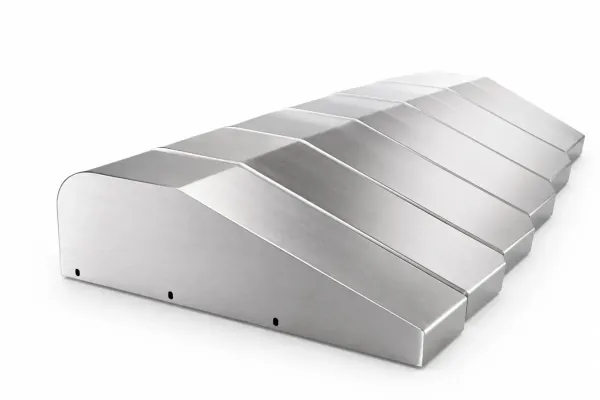
Aluminum Sheet Metal Parts: What Changes When the Drawing Says Aluminum
Aluminum sheet metal parts need a different bend radius, weld preparation, handling rule and finishing route. What to specify before you send the drawing.
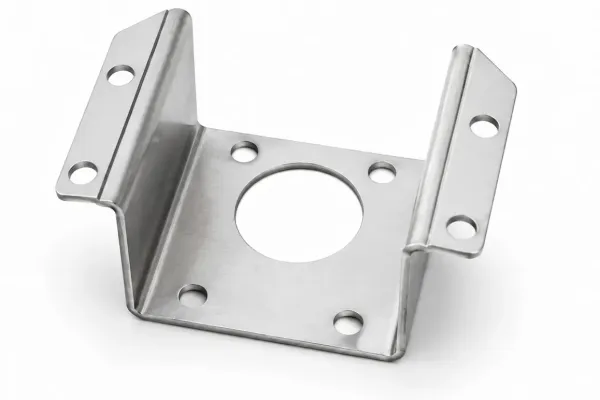
How Sheet Metal Lead Times Are Built, and Where the Days Go
Sheet metal fabrication lead time is a chain of material, queues, finishing and inspection decisions. Where the days go, and what buyers can control.
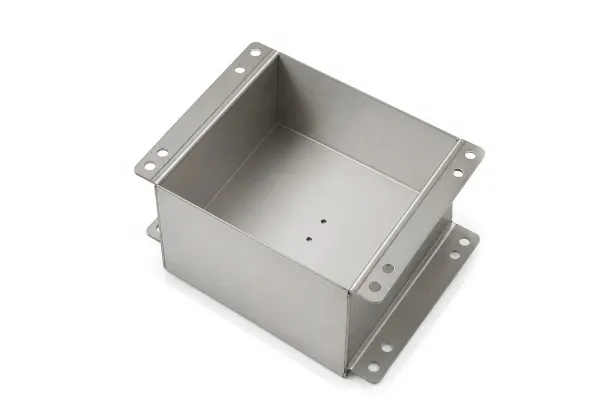
How to Choose Sheet Metal Material: Five Options and the Questions That Separate Them
How to choose sheet metal material depends on environment, process and finish, not strength. Compare stainless, carbon, galvanized, cold-rolled and aluminum.