
Features
Why Choose Juduo?
Every Process Under One Roof
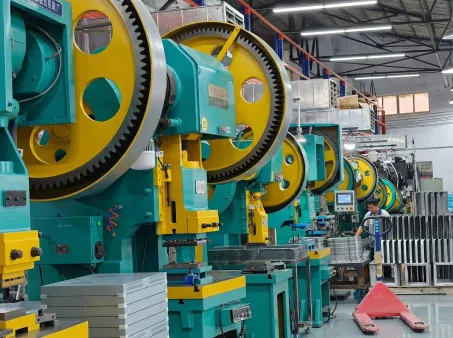
From laser cutting and CNC turret punching to stamping, bending, robotic welding, riveting, tapping and polishing, every operation runs inside our own 5,000 m² facility on more than 50 machines. Nothing leaves the building between steps, so one part number stays under one responsibility from raw sheet to finished assembly — no handovers, no gaps to argue about.
Not Every Part Needs a Die
Laser cutting and turret punching work with standard tooling, so prototypes, small batches and late design revisions carry no tooling cost at all. We propose a die only when the quantity and the geometry make it the cheaper route — and we tell you which side of that line your part sits on before you commit.
Checked at Five Points, Not at the End
Incoming material, first piece, in-process, assembly fit and pre-dispatch are each checked separately under an ISO 9001:2015 system, with stamping pass rates running at 99.8%. The reason for checking early is simple: a problem found at first piece costs one part, while the same problem found at dispatch costs the whole batch.
A Drawing, a Sample or a Photograph Is Enough to Start
Send PDF, STEP, IGS, DXF or PNG files, or send the part itself. Where no drawing exists, we design and manufacture to your requirement, then move from approved sample to small batch and repeat production. Every enquiry is answered within 24 hours.
We Have The Best Solutions for Your Business
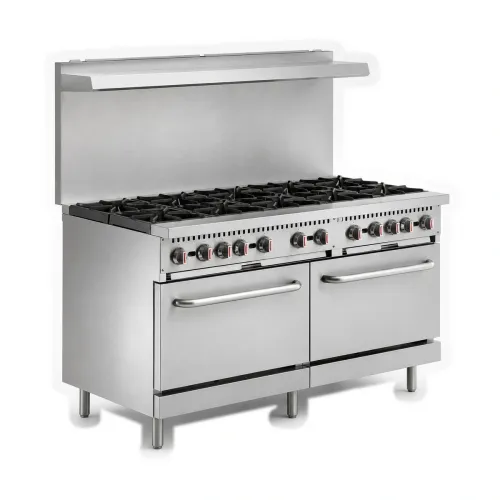
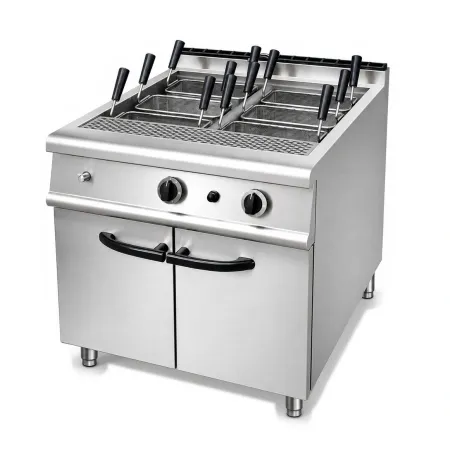
Founded in 2016, Zhongshan Juduo Hardware Products Co., Ltd. specializes in build-to-print metal stamping and sheet metal fabrication. We manufacture equipment housings, metal cabinets, structural assemblies, and stamped components according to customers’ drawings, samples, and technical requirements.
Led by a founder with more than 20 years of industry experience, our team supports tooling development, prototyping, small-batch production, and repeat orders. We work with customers to review materials, dimensions, tooling, and manufacturing requirements before production, helping balance manufacturability, quality, and cost. Surface finishing can also be coordinated through our qualified production partners.
Custom Metal Stamping Manufacturer: The Decision Comes Before the Supplier
Most buyers looking for a custom metal stamping manufacturer have already decided that the part should be stamped. Sometimes that decision is right and sometimes it quietly costs the project more than the part is worth, because the choice between a die and a programmable route is not a matter of supplier preference — it is arithmetic on a specific geometry at a specific quantity. Get the arithmetic wrong and no amount of shopping will fix it.
Stamping Is a Volume Decision Before It Is a Supplier Decision
A stamping die is a fixed cost that buys a lower cost per part. Everything about the economics follows from that sentence. At low quantities the fixed cost dominates and the part is expensive; as quantity rises, the die is amortised over more pieces and the per-part price falls toward the cost of material plus press time.
Two errors are common, and they point in opposite directions. The first is opening a die for a product that is still finding its shape, where every design change becomes a tooling change and the money spent on tooling would have bought years of laser cutting. The second is running a mature, high-volume part on a programmable route, paying a per-part premium on every unit because nobody went back and did the arithmetic once the volume arrived.
The number that actually matters is not the order quantity but the amount of work the die removes from each part. A part with twelve features and three forming operations takes a lot of machine time on a laser and a press brake; the same part in a die is one stroke. A large, plain panel takes very little machine time either way, so the die saves almost nothing and the fixed cost never earns back.
Four Part Features That Push a Job Toward or Away From a Die
Four characteristics decide most of these cases, and they can be read off a drawing before any quoting happens.
Feature density. Many holes, slots, notches and cutouts packed into a small area is the classic stamping case, because a single stroke replaces a long cutting path. A part with three holes spread over half a square metre is the opposite.
Forming complexity. Multiple bends, drawn features, lances, embosses and rivets all add operations on a press brake or a secondary line, and each one adds handling and re-fixturing. Progressive tooling collapses those into one pass, which is where the largest savings sit.
Material utilisation. A die is fed from a strip, and the strip layout decides how much of each coil becomes a part. That number is visible before quoting and it often explains a price gap between two suppliers that looks arbitrary from the outside.
Stability of the design. Tooling rewards geometry that stops moving. A part that changes twice a year is better served by a route that absorbs revisions for free, even at a volume where a die would be cheaper on paper.
What the Tooling Actually Buys You
It is tempting to describe a die as a speed investment. In practice the first thing it buys is consistency, and the speed is a consequence.
A stamped part is located by the tool, not by an operator's setup. Once the die is proven, part ten thousand is made in the same relationship to the same references as part ten, which is why stamping holds dimensions on features that would drift across a manual forming sequence. That reproducibility is what makes downstream automation possible: a robot or a jig can be built around a part that does not vary.
What it does not buy is flexibility. A die is a physical object with a fixed geometry, and changing it means cutting metal, re-proving the tool and inspecting a new first article. Every project that opens a die should therefore be clear about which dimensions are likely to move in the product's life, and design those where a modification is cheapest — ideally in a trim or pierce area rather than in the forming stations.
Reading a Stamping Quote: Setup, Material and Run Are Priced Differently
A stamping quotation normally contains three kinds of money, and they behave differently when the quantity changes. Separating them is the only way to compare two offers honestly.
Tooling, once. The die, and any fixtures or gauges built with it. This is a project cost, not a unit cost, and it should be quoted separately with its own delivery date so it can be tracked.
Material, per part. Driven by the strip layout, the grade and the thickness. Two quotes that name the same material can still differ here because one nests the part more efficiently, and that difference persists on every unit for the life of the tool.
Run, per part. Press time, secondary operations, finishing and inspection. This is where assumptions about die life, press speed and inspection level hide, and where a price that looks low may simply assume a shorter tool life or a lighter inspection plan than you intended.
When two quotes for the same drawing differ by a wide margin, the reason is almost always in one of these three lines rather than in the margin. Ask which one, and the answer is usually informative: a different strip layout, a different grade, or a different inspection scope.
When Laser Cutting and Bending Beat a Die at the Same Volume
There are quantities where a die is cheaper on paper and still the wrong choice, and they are worth recognising before the tooling is commissioned.
The clearest case is a product family rather than a single part. Ten variants of a bracket, each at a modest volume, share a laser and a press brake with no tooling between them; ten dies would multiply the fixed cost by ten. The second is a design that is still being validated in the field, where a revision in month three would arrive after the die is cut. The third is a large part with few features, where the die saves handling rather than machine time and the payback period stretches beyond the product's life.
The fourth is schedule. A first article from a die arrives after design, build and tryout; a laser-cut sample can be in the buyer's hands in days. When a launch date depends on a physical part being approved, the programmable route is often what makes the date, and the die follows once the geometry is settled.
Questions That Separate a Stamping Shop From a Broker
Once the process decision is made, the remaining risk is whether the supplier actually controls it. Five questions resolve most of that.
Where is the die built, and by whom? Who proves the first article, and against which drawing revision? What happens when a die starts wearing — is it maintained and re-proven in-house? Who decides the strip layout, and will you show it to me? And if parts fail at my line, who comes to look?
A manufacturer answers these with names, departments and records. A broker answers them with assurances. The difference becomes visible at the first technical problem, which is exactly when it costs the most. Tooling developed from stamped components developed from approved drawings is only as reliable as the organisation that keeps the die in condition between orders.
It is also fair to ask what the shop can do when a die is not the answer, since a supplier who only sells stamping will sell stamping. Press capacity, laser cutting and forming all sit behind the equipment list behind that capacity — and a shop that owns both routes can recommend the cheaper one without losing the job.
Conclusion
Choosing a custom metal stamping manufacturer is the second decision, not the first. The first is whether this part, at this quantity, with this much design stability, is better served by a die or by a programmable route. Answer that with arithmetic rather than habit, and the supplier shortlist becomes a much smaller and more useful list.
For parts that do justify tooling, the things worth checking are unglamorous: who builds the die, who proves it, how it is maintained, and how the strip layout was chosen. Those four answers determine whether the low unit price on the quotation survives contact with a real production year.
Frequently Asked Questions
Can you stamp a part that is still being designed?
We can, but we usually advise against opening a die while the geometry is still moving. The workable sequence is to prove the design on a programmable route, settle the features that affect the strip layout, and then commit to tooling. That way the die is built once against a stable drawing instead of being modified three times during development.
How long does a die last?
It depends on the material being stamped, its thickness and hardness, the lubrication, the press condition and how the tool is maintained. A die is not a consumable with a fixed life; it is maintained, sharpened and repaired over years. What matters commercially is whether the supplier has the capability to service it in-house, because a die that has to travel for repair stops production twice.
Do you also make the secondary operations?
Yes — tapping, riveting, welding, deburring, polishing and assembly are carried out alongside stamping, which is why parts can leave as finished components rather than as blanks. Where a secondary operation is done outside, it is worth knowing before the order, because it adds a transport step and a second inspection point between two companies.
What do you need to quote a stamped part?
A drawing or model, the material and thickness, the annual or order quantity, and any secondary operations or finishing required. A 2D drawing with the critical dimensions marked is more useful than a perfect model with nothing indicated, because it tells us which features must hold in production and which are free to sit inside a general tolerance.
Not sure whether the part needs a die?
Ask for a Process RecommendationPDF, STEP, IGS, DXF or PNG | Die route compared against laser and bending | Feedback within 24 hours
User Reviews
What users say about Juduo
Frequently Asked Question
Do you have any question?
There is no universal number, and any supplier who quotes one without seeing the part is guessing. What drives the crossover is the amount of work the die removes: a simple bracket with a few holes can justify tooling at a low quantity because each part is formed in one hit, while a large panel with few features may never justify it because laser cutting and bending are already fast. The useful calculation is per part: die cost divided by the quantity you can commit to, compared with the per-part cost of the programmable route.
Yes. Dies are developed in-house from the approved drawing, then proven with a first article before the volume run is released. Keeping tooling and production under the same roof matters more than it sounds, because a die that is making parts slightly out of tolerance is diagnosed by the people who built it rather than negotiated between two companies.
That depends on the agreement made at the start, and it should be settled before the die is cut rather than after. Some buyers commission and own the tooling; others take a price per part that includes it. Either arrangement works, but the ownership and the conditions for transfer need to be written down, because a die that cannot be moved is a commercial constraint that only becomes visible when you try to move it.
Small changes are often possible as a die modification — moving a hole, adjusting a trim edge, adding a feature in an open area. Changes that affect the forming sequence, the strip layout or the number of stations are usually a new tool rather than a modification. The earlier a change is raised, the more of it can be absorbed; the same change raised after the first production run is always a tooling project.
Our updates and blog posts
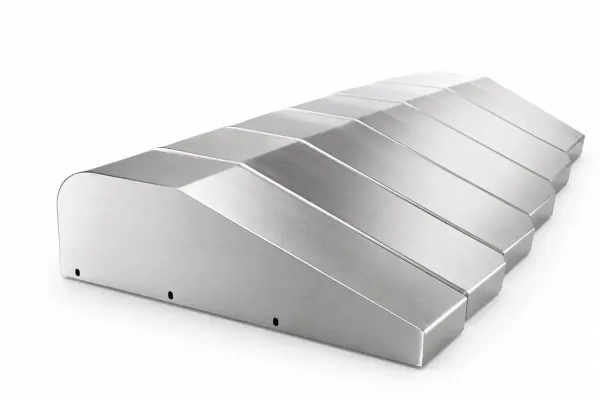
Aluminum Sheet Metal Parts: What Changes When the Drawing Says Aluminum
Aluminum sheet metal parts need a different bend radius, weld preparation, handling rule and finishing route. What to specify before you send the drawing.
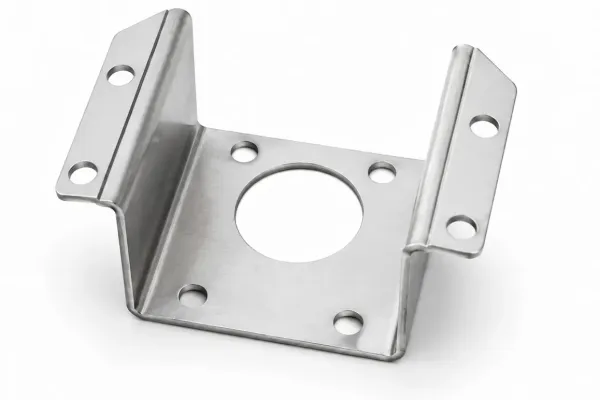
How Sheet Metal Lead Times Are Built, and Where the Days Go
Sheet metal fabrication lead time is a chain of material, queues, finishing and inspection decisions. Where the days go, and what buyers can control.
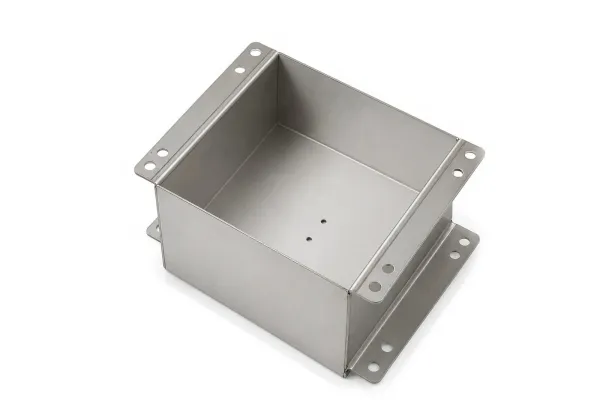
How to Choose Sheet Metal Material: Five Options and the Questions That Separate Them
How to choose sheet metal material depends on environment, process and finish, not strength. Compare stainless, carbon, galvanized, cold-rolled and aluminum.