
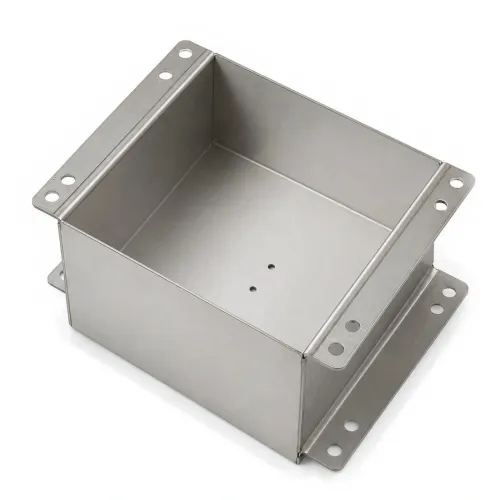
Features
Why Choose Juduo?
Every Process Under One Roof
From laser cutting and CNC turret punching to stamping, bending, robotic welding, riveting, tapping and polishing, every operation runs inside our own 5,000 m² facility on more than 50 machines. Nothing leaves the building between steps, so one part number stays under one responsibility from raw sheet to finished assembly — no handovers, no gaps to argue about.
Not Every Part Needs a Die
Laser cutting and turret punching work with standard tooling, so prototypes, small batches and late design revisions carry no tooling cost at all. We propose a die only when the quantity and the geometry make it the cheaper route — and we tell you which side of that line your part sits on before you commit.
Checked at Five Points, Not at the End
Incoming material, first piece, in-process, assembly fit and pre-dispatch are each checked separately under an ISO 9001:2015 system, with stamping pass rates running at 99.8%. The reason for checking early is simple: a problem found at first piece costs one part, while the same problem found at dispatch costs the whole batch.
A Drawing, a Sample or a Photograph Is Enough to Start
Send PDF, STEP, IGS, DXF or PNG files, or send the part itself. Where no drawing exists, we design and manufacture to your requirement, then move from approved sample to small batch and repeat production. Every enquiry is answered within 24 hours.
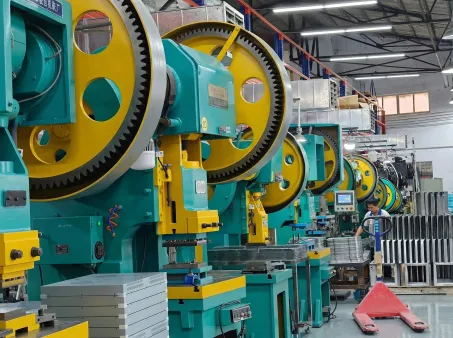
We Have The Best Solutions for Your Business
Founded in 2016, Zhongshan Juduo Hardware Products Co., Ltd. specializes in build-to-print metal stamping and sheet metal fabrication. We manufacture equipment housings, metal cabinets, structural assemblies, and stamped components according to customers’ drawings, samples, and technical requirements.
Led by a founder with more than 20 years of industry experience, our team supports tooling development, prototyping, small-batch production, and repeat orders. We work with customers to review materials, dimensions, tooling, and manufacturing requirements before production, helping balance manufacturability, quality, and cost. Surface finishing can also be coordinated through our qualified production partners.
Stainless Steel Stamping Parts: The Process Is Rewritten, Not Adjusted
When a part moves from carbon steel to stainless, the drawing often changes by one word in the material field. Nothing else is revised, and the quotation comes back a little higher, and everyone assumes the difference is the cost of the metal. It rarely is. The difference is that five process decisions have to be made again — die material, clearance, lubrication, station count and surface treatment — and each of them interacts with the other four.
Changing to Stainless Rewrites the Process, Not Just the Material Field
Stainless steel behaves differently from carbon steel in ways that matter at every stage of a stamping operation. It work-hardens more steeply, so the force needed for a second forming step is higher than for the first. It springs back further, so the tool has to be shaped to a geometry that is not the finished geometry. And it has a strong tendency to adhere to tool steel, which turns a cutting edge into a scoring edge within a production run.
Because these effects compound, the decisions cannot be taken in isolation. A tighter clearance chosen to improve edge quality increases the risk of galling. A harder die surface that resists galling may need a different approach to sharpening. A lubricant that solves a forming problem may leave a residue that interferes with the weld or the passivation that follows.
The order in which the decisions are made therefore matters as much as the decisions themselves: grade and thickness first, then die structure, then clearance and lubrication, then surface and cleaning. Each step constrains the next, and the cost of revising an earlier step rises sharply once the later ones exist.
Work Hardening: Why the Second Hit Is Harder Than the First
Stainless steel gets stronger as it is deformed. The crystal structure changes under strain, and the material that leaves the first forming station is harder than the material that entered it. The second station therefore works a harder material, the third harder still, and a part that requires several forming operations can end up with edges and corners that are brittle enough to crack.
This is why stainless parts are often produced with more stations than the same part in carbon steel, and why a deep form that is done in one hit in mild steel may need two or three progressive steps in stainless. Each added station is tooling cost, but the alternative is a part that tears at the last operation — the most expensive place to find a problem, because everything before it has already been paid for.
There is also a design side to it. A radius that is generous enough to form in one operation is more valuable in stainless than in any other material, because it removes an entire station. Designers who specify a tight radius for appearance often find that the cost sits in the tooling rather than in the material.
Die Material and Clearance: The Two Numbers That Decide Galling
Galling is the adhesion of stainless to the tool surface, and it is the single most common reason a stainless stamping job fails in production rather than in tryout. The mechanism is simple: two metals in sliding contact under pressure, with insufficient separation, weld together at a microscopic point and then tear apart.
Two variables control it. The first is the tool surface: harder materials, suitable coatings and a well-polished face all reduce adhesion. The second is clearance. In cutting, clearance decides whether the material shears cleanly or is torn; in forming, the gap between punch and die decides how much the material is squeezed. Too little clearance in stainless produces a bright, torn edge and a rapid build-up of material on the tool.
Clearance for stainless is generally set larger than for carbon steel of the same thickness, and it is not a single value across the whole tool — cutting stations, forming stations and piercing punches each have their own requirement. This is the part of a die design that is hardest to change later, because clearance is built into the physical dimensions of the punch and the opening.
Lubrication and the Cleaning Problem It Creates
Stainless stamping needs lubrication more than carbon steel does, and the lubricant becomes part of the part's history. It sits on the surface after forming, it collects debris, and it has to be removed before any operation that depends on a clean surface — welding, passivation, adhesive bonding or a cosmetic finish.
The choice of lubricant therefore reaches beyond the press. A heavy drawing lubricant that solves a forming problem may be difficult to remove completely from a folded edge or a blind feature, and residue left in a crevice becomes a contamination source that only appears at the welding stage. A lighter lubricant is easier to clean but may not carry the load in a deep form.
The workable approach is to decide the cleaning method at the same time as the lubricant. If the part will be welded, the lubricant must be removable by the cleaning process available. If the part will be passivated, any residue that interferes with the chemical reaction has to go first. Treating lubrication as a press-shop decision and cleaning as a downstream problem is how a batch ends up with weld porosity that nobody can explain.
Springback, Edge Quality and the Trim Sequence
Stainless steel springs back more than carbon steel, which means the punch has to over-bend the material so that it relaxes into the required angle. The amount of over-bend depends on the grade, the thickness, the radius and the amount of cold work already in the part, and it is one of the reasons a die proven on one stainless grade may not transfer cleanly to another.
Edge quality carries a second set of issues. A sheared stainless edge is work-hardened and can develop micro-cracks, which matters on parts that will be bent close to the edge or subjected to fatigue. A burr on a stainless edge is harder to remove than on mild steel and more likely to injure during handling, so the burr side and its acceptable height belong in the drawing rather than in a verbal agreement.
The trim sequence is where these two concerns meet the tooling. Trimming after forming removes material that has already been work-hardened, which requires more force and produces a different edge than trimming in the flat. Where a part needs a clean visible edge, the sequence is usually arranged so that the critical edge is produced by a single clean shear rather than by a series of partial cuts.
Cost Order: Which Decisions Must Be Made First
Because the five decisions constrain one another, the sequence in which they are made determines how much the part costs. Four steps, in order.
Grade and thickness. Cheapest to change and most consequential. A grade change alters work hardening, springback and galling behaviour at once, which is why it is a tooling review rather than a substitution.
Die structure and station count. Decided from the forming depth and the number of features, with extra stations allowed for work hardening. Changing this later means rebuilding the tool.
Clearance and lubrication. Set against the die and the material, and confirmed during tryout. Adjustable within limits, but the limits are physical.
Surface, cleaning and passivation. The last step, and the one most often treated as an afterthought, even though it is what the customer sees. A part that forms correctly and cleans badly has still failed.
Buyers who understand this sequence spend their early attention on the grade and the geometry rather than on the finish, because the finish is the only item that can still be changed cheaply at the end. Stainless parts stamped to drawing are quoted from that order of decisions, not from a material substitution.
It is also why the tooling review happens before the price. The tooling review that precedes a stainless run is where the die material, the clearance and the lubrication are fixed together, and where a part that cannot be made economically first becomes visible.
Conclusion
Stainless steel does not ask for a better version of the same process. It asks for a different set of decisions, made in a different order, with the interactions between them understood. Work hardening sets the station count, clearance and die surface decide whether the tool survives, lubrication decides whether the part can be welded afterwards, and springback decides whether the geometry holds.
The practical message for a buyer is short. When a part moves to stainless, expect the tooling conversation to be reopened, and expect the useful questions to be about sequence and clearance rather than about grade alone. A supplier who answers only the grade question has not yet started.
Frequently Asked Questions
Can stainless be stamped without lubrication?
On very light forming of thin material it is sometimes possible, but it shortens tool life and raises the risk of galling sharply. Where the part also needs welding or passivation, the absence of lubricant is convenient — which is why the decision is a balance between tool life and downstream cleanliness rather than a simple preference.
Why does stainless spring back more?
It has higher strength and a steeper hardening curve, so the elastic energy stored during forming is greater and a larger share of the deformation is recovered when the load is released. The tool compensates by over-bending, and the amount of compensation is specific to the grade, thickness and radius being run.
Is laser cutting better for thin stainless?
It is often better for low and medium volumes because it needs no tooling and handles revisions at no cost. At high volume, a die wins on cycle time and consistency. The thickness matters less than the quantity and the feature density, which is the same arithmetic that applies to any stamped part.
What thickness range can be stamped?
It depends on the press capacity, the die design and the feature geometry rather than on a single number. Our press line runs from 40T to 250T, which sets the practical boundary for force. Within that, thin material is limited by handling and burr control, and thick material by the force needed to shear and form it.
Send the part before the die is designed
Send the Stainless Part for ReviewPDF, STEP, IGS, DXF or PNG | Clearance, stations and lubrication reviewed | Feedback within 24 hours
User Reviews
What users say about Juduo
Frequently Asked Question
Do you have any question?
Because it work-hardens as it is formed, galls against tool steel more readily and springs back further. All three push the tooling in the same direction: harder die surfaces, more clearance in the cutting stations, more attention to lubrication and sometimes an extra forming station to avoid doing too much in one hit. A die built for mild steel will produce parts, for a while, and then start tearing or scoring.
Galling is local welding between the stainless surface and the tool, which tears material from the part and leaves a scored patch that grows with each stroke. It is prevented by a combination of surface hardness on the tool, adequate clearance, effective lubrication, and keeping the tool clean between runs. Once it starts it accelerates, because the damaged tool surface collects more material.
Rarely without modification. The cutting clearance that suits carbon steel is generally too tight for stainless, and the tool surfaces may not be hard enough to resist galling. Attempting it typically produces a short run of acceptable parts followed by burrs, tearing and tool damage — which is more expensive than the tooling review that was skipped.
Usually, for four reasons: the material costs more, the tooling needs harder surfaces and more clearance, the forming may need extra stations because of work hardening, and lubrication and cleaning become process steps rather than an afterthought. The gap narrows at high volume where tooling is amortised, and widens on parts with deep forms or tight radii.
Our updates and blog posts
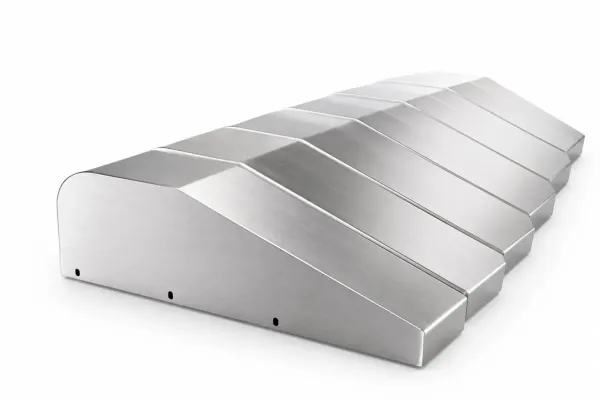
Aluminum Sheet Metal Parts: What Changes When the Drawing Says Aluminum
Aluminum sheet metal parts need a different bend radius, weld preparation, handling rule and finishing route. What to specify before you send the drawing.
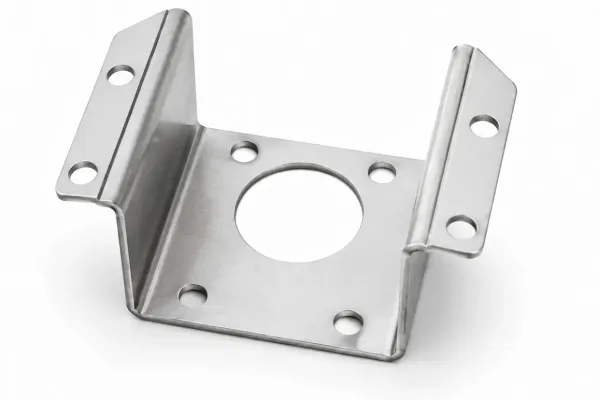
How Sheet Metal Lead Times Are Built, and Where the Days Go
Sheet metal fabrication lead time is a chain of material, queues, finishing and inspection decisions. Where the days go, and what buyers can control.
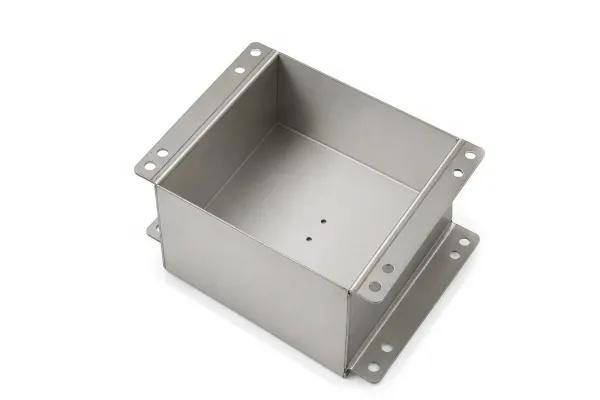
How to Choose Sheet Metal Material: Five Options and the Questions That Separate Them
How to choose sheet metal material depends on environment, process and finish, not strength. Compare stainless, carbon, galvanized, cold-rolled and aluminum.