

Features
Why Choose Juduo?
Every Process Under One Roof
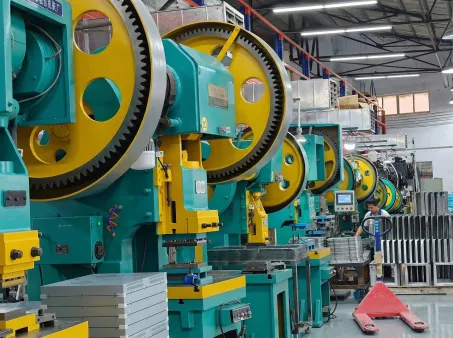
From laser cutting and CNC turret punching to stamping, bending, robotic welding, riveting, tapping and polishing, every operation runs inside our own 5,000 m² facility on more than 50 machines. Nothing leaves the building between steps, so one part number stays under one responsibility from raw sheet to finished assembly — no handovers, no gaps to argue about.
Not Every Part Needs a Die
Laser cutting and turret punching work with standard tooling, so prototypes, small batches and late design revisions carry no tooling cost at all. We propose a die only when the quantity and the geometry make it the cheaper route — and we tell you which side of that line your part sits on before you commit.
Checked at Five Points, Not at the End
Incoming material, first piece, in-process, assembly fit and pre-dispatch are each checked separately under an ISO 9001:2015 system, with stamping pass rates running at 99.8%. The reason for checking early is simple: a problem found at first piece costs one part, while the same problem found at dispatch costs the whole batch.
A Drawing, a Sample or a Photograph Is Enough to Start
Send PDF, STEP, IGS, DXF or PNG files, or send the part itself. Where no drawing exists, we design and manufacture to your requirement, then move from approved sample to small batch and repeat production. Every enquiry is answered within 24 hours.
We Have The Best Solutions for Your Business
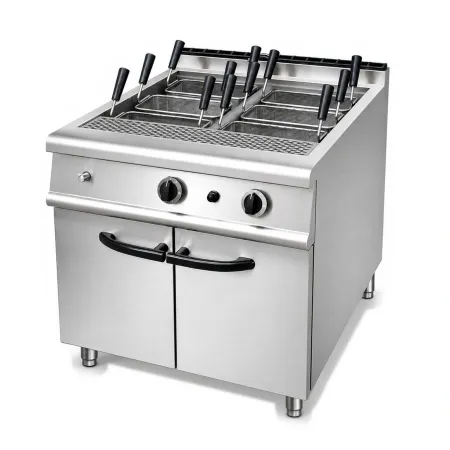
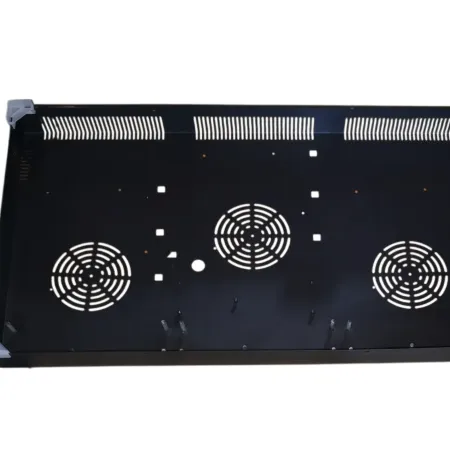
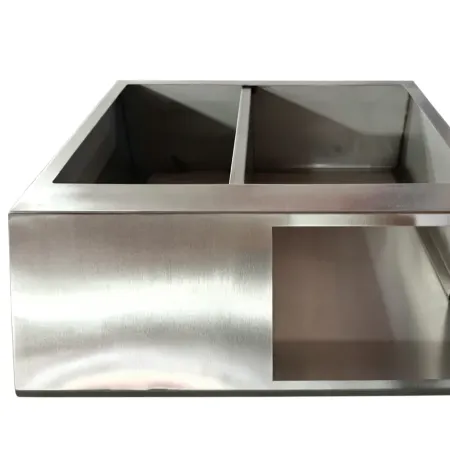
Founded in 2016, Zhongshan Juduo Hardware Products Co., Ltd. specializes in build-to-print metal stamping and sheet metal fabrication. We manufacture equipment housings, metal cabinets, structural assemblies, and stamped components according to customers’ drawings, samples, and technical requirements.
Led by a founder with more than 20 years of industry experience, our team supports tooling development, prototyping, small-batch production, and repeat orders. We work with customers to review materials, dimensions, tooling, and manufacturing requirements before production, helping balance manufacturability, quality, and cost. Surface finishing can also be coordinated through our qualified production partners.
Sheet Metal Fabrication in China: What Distance Actually Changes
Buyers comparing a domestic fabricator with one in China usually compare the wrong things. They compare machine lists, which are similar, and hourly rates, which are not the whole story. What differs most is the price of a question. Locally, a doubt becomes a conversation the same afternoon. Across an ocean, the same doubt becomes a document, a time zone and a day — and a project with twenty doubts behaves very differently from a project with two.
Distance Changes the Cost of a Question, Not Just a Pallet
In a local relationship, ambiguity is cheap. Someone walks over to the machine, points at the drawing and the answer is settled before the part is formed. That interaction costs minutes and leaves no record, and it is why domestic fabrication tolerates drawings that are incomplete.
At distance, the same ambiguity has to be written down, sent, read, answered and confirmed. Each of those steps is fine on its own. Multiplied across a project, they become the dominant term in the schedule, and they introduce a second risk: the answer arrives after the material has been cut, because nobody wanted to hold production for a question.
The practical consequence is that the quality of a drawing matters more in an overseas project than in a local one. Not because the fabricator is less capable, but because the drawing is now doing the job that a conversation used to do. A drawing that answers the obvious questions is worth more than a faster machine.
Time Zones and the Real Length of an Approval Loop
The unit of time in a distant project is not the day, it is the loop. A loop is one question out and one answer back, and with a working-hours offset it takes roughly a day even when both sides respond immediately.
That number has consequences that are easy to underestimate. A project with three approvals — drawing, sample, first article — consumes three loops minimum, and a project where the drawing raises eight separate questions can consume eight if they are sent one at a time. The same eight questions asked in one message consume one.
So the habits that shorten distant projects are unremarkable. Batch questions instead of sending them as they occur. Answer the whole list in one reply even if some answers are provisional. Put decisions in writing before a call so the call confirms rather than negotiates. And where a decision is genuinely blocked, say which part of the job can proceed without it, so production does not stall behind an unrelated question.
What Has to Be Decided Before the First Cut
Because corrections are expensive at distance, the six decisions worth closing before material is committed are the ones that cannot be absorbed later.
Material and thickness, named rather than implied, since both affect forming and cannot be changed by editing a note. Which dimensions are functional, because those are what the inspection plan will target and what the first article will be judged on. Which faces are visible, because finish and handling differ completely between a hidden bracket and a front panel. The acceptance standard, meaning what will be measured and by what method. How the parts are packed and identified, since a mixed carton is a problem that only appears at the receiving dock. And what happens if a question arises mid-production — hold, or proceed on a stated assumption.
That last one is the least discussed and the most useful. A supplier who holds production for every doubt will be slow; one who proceeds on assumptions without saying so will be fast and wrong. The workable answer is a rule: proceed only where the assumption is written down and reversible.
Documentation That Replaces a Walk Through the Shop
When a buyer cannot walk the floor, documents take over the job of seeing. The point is not to collect more paper; it is to collect the specific evidence that answers the questions a visit would have answered.
A first-article report should show the measurements, the instrument, the drawing revision and who signed it. A set of process photographs should show the part at stages a buyer never normally sees: the weld before dressing, the formed part before finishing, the assembly before packing. An inspection record for a production lot should identify the batch and the sampling used. And material documentation should trace the heat or lot where the specification requires it.
A useful test of any document is whether it can answer a question months later without a conversation. A certificate that says "quality assured" cannot. A record that says which dimensions were measured on which batch can.
When Something Goes Wrong, 8,000 km Away
Every long-distance supply relationship eventually has a batch that is not right, and the way that batch is handled is the real test of the arrangement.
The first step is evidence rather than opinion: photographs of the affected parts, measurements taken with a known method, the quantity involved and the revision on the drawing. The second is comparison with the inspection record from the same lot, which does one of two things — it confirms the problem, or it reveals that the two sides are measuring differently. Both outcomes are useful, and the second is more common than buyers expect.
The remedy then has three ordinary forms. Replace the affected quantity, if time allows. Accept the parts under a concession, if the deviation does not affect function. Or authorise a local rework, where the fix is simple and the cost of return exceeds the cost of repair. What makes any of these workable is that the decision is made against a record rather than against a claim, which is only possible if the record was produced when the parts were made.
Choosing a Partner You Cannot Visit
Most buyers never see the factory that makes their parts, which makes the selection process a series of substitutes for a visit.
A small trial order is the most informative of them, because it exercises everything at once: drawing review, quoting, production, inspection and documentation. A video walk-through of the specific machines that will run the job is the second, and it is worth asking to see the equipment rather than a general tour. A third-party inspection on the first shipment is the third, and it is most useful when it is arranged before the parts are packed rather than after they arrive.
What these substitutes have in common is that they test process rather than promises. How the factory is set up to work with overseas buyers is visible in the first exchange of drawings, long before any inspection is commissioned, and it usually reveals more than a capability list.
It also helps to see how the work is sequenced from the supplier's side, since the stages after fabrication are where distant projects lose the most time. The process used for export orders should include the approval points, not only the manufacturing steps.
Conclusion
Sheet metal fabrication in China is not a different manufacturing process; it is the same process viewed through a delay. The machines are comparable, the skills are comparable, and the parts can be identical. What changes is that every decision has to survive being written down and sent, and every problem has to be described before it can be solved.
Buyers who plan for that do well. They send complete drawings, batch their questions, define acceptance before production, and keep the inspection records that make a later dispute resolvable. Those four habits matter more than the distance itself, and they cost nothing to adopt.
Frequently Asked Questions
Do you have English-speaking engineers?
Drawings, quotations and inspection records are handled in English, and technical questions are answered by the people who will actually plan the job rather than by a sales intermediary. Where a question needs a drawing mark-up, it is returned as an annotated file so the point is unambiguous.
Can we appoint a third-party inspection?
Yes, and it is welcome. It is most effective when the inspector is briefed on the dimensions that matter rather than given a general instruction, and when the inspection happens before packing so that any finding can still be acted on. We provide the inspection records and the drawing revision for comparison.
Can you keep our drawings confidential?
Yes. Customer drawings are used for the project they were supplied for, and a confidentiality agreement can be signed before drawings are exchanged. Where a part is developed with us, the tooling and the drawing remain the customer's property unless a different arrangement is agreed in writing.
How quickly can a sample be produced?
It depends on whether tooling is needed. A part that can be laser cut and formed is usually fast because nothing has to be built first; a stamped sample waits for a die. The schedule also depends on material availability and on how complete the drawing is, which is why the first review usually returns a date together with any questions.
Put the whole question in one message
Send Your Drawing and Your Time ZonePDF, STEP, IGS, DXF or PNG | Questions batched into one reply | Feedback within 24 hours
User Reviews
What users say about Juduo
Frequently Asked Question
Do you have any question?
Ask for records rather than claims: a first-article report from a comparable part, a routing that shows the operations and inspection points, the certificate behind any management-system claim, and a list of what is subcontracted. Then run a small order and check how the supplier handles a question, because the response to an awkward question predicts the next two years better than any brochure.
At minimum, a packing list that matches the cartons, an inspection record for the lot with the drawing revision it was checked against, and material documentation where the specification requires it. Where a first article was approved, the record of that approval should be traceable to the batch. These documents are what make a problem discussable weeks later, when the parts are in another country and nobody can walk over to look.
First by establishing the facts: photographs, measurements, the quantity affected and the revision on the drawing. Then by comparing those facts with the inspection record from the batch, which either confirms the problem or reveals a difference in measurement method. The remedy — replacement, credit, rework locally or a concession — follows from that comparison rather than from the first email.
The overlap is managed by pushing decisions earlier rather than by staying awake. Questions are returned within one working day, which means a buyer sending a drawing in the morning European time has an answer the next morning. Anything that needs a live discussion is scheduled in the overlap window, and any decision that would otherwise wait for that call is put in writing first so the call confirms rather than decides.
Our updates and blog posts
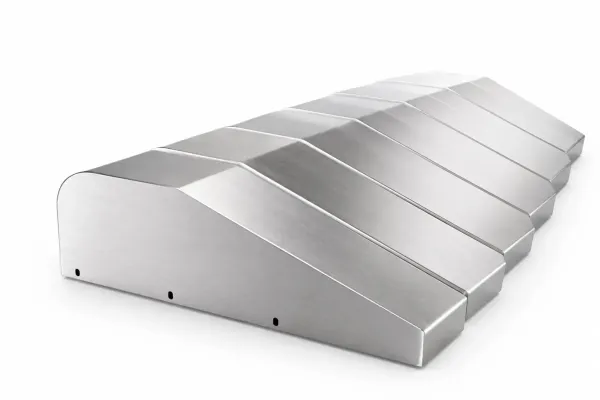
Aluminum Sheet Metal Parts: What Changes When the Drawing Says Aluminum
Aluminum sheet metal parts need a different bend radius, weld preparation, handling rule and finishing route. What to specify before you send the drawing.
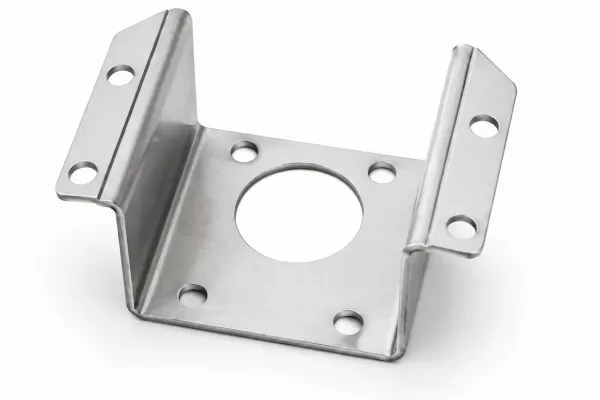
How Sheet Metal Lead Times Are Built, and Where the Days Go
Sheet metal fabrication lead time is a chain of material, queues, finishing and inspection decisions. Where the days go, and what buyers can control.
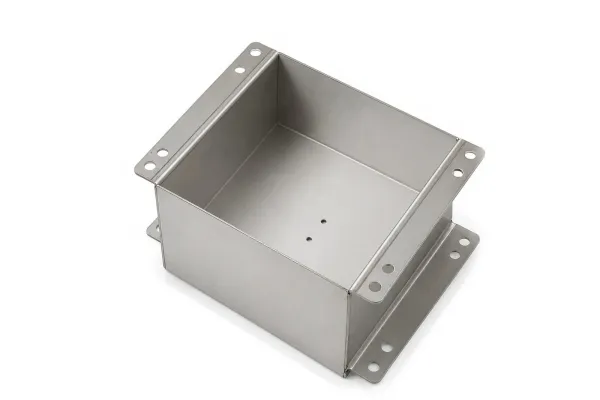
How to Choose Sheet Metal Material: Five Options and the Questions That Separate Them
How to choose sheet metal material depends on environment, process and finish, not strength. Compare stainless, carbon, galvanized, cold-rolled and aluminum.