.png?imageMogr2/format/webp)
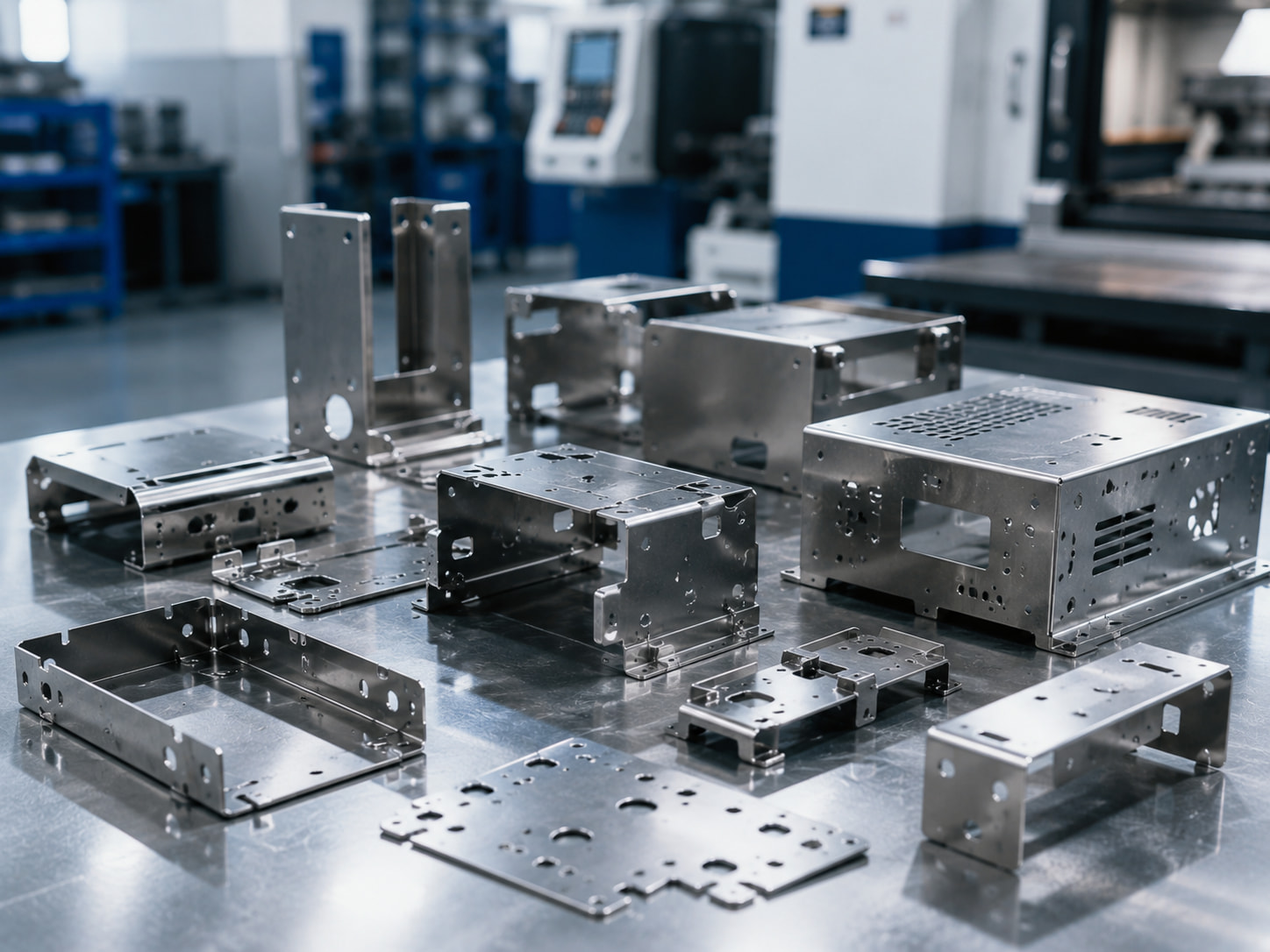
A sheet metal part is decided in the drawing. See the 5 early design choices that decide whether it fits, what it costs, and how fast it ships.
A sheet metal part is decided long before the first laser cuts the blank. The drawings that arrive at our shop almost always share the same pattern: the parts that fit on the first try, ship on schedule and stay affordable are not the ones with the tightest tolerances — they are the ones whose designer made five choices on purpose instead of by default. Here are those five choices, and why each one quietly decides whether the part works.
Start With the Environment, Not the Material Catalog
Most design reviews open on the wrong question: which alloy is strongest? Strength rarely decides a sheet metal part's life. What decides it is where the part lives. A bracket inside a dry cabinet and the same bracket mounted on a washdown line in a commercial kitchen face completely different worlds. Stainless earns its cost only when corrosion, food contact or daily cleaning is in the picture; for a dry indoor frame, cold-rolled steel with the right coating is the cheaper part that lasts just as long. We still see drawings specify stainless "because it is better" and then fight rust at the cut edges anyway, because the real enemy was the finish, not the base metal. Pick the material by the environment the part actually sits in, and the rest of the design gets simpler.
Thickness Is a Geometry Question, Not Just a Number
The first reflex when a part feels weak is to add thickness. It is usually the wrong move. Stiffness in sheet metal comes from form — a return flange, a rib, a folded edge — as much as from gauge. A 1.5 mm part with a 12 mm flange can out-stiffen a flat 2.5 mm part and weigh less. Adding thickness also triggers a chain: bigger bend radii, more springback, a larger press, heavier shipping, and a part that no longer fits the assembly it was meant for. Before changing the gauge, name the failure you are trying to prevent — flex, dent, or vibration — and fix it with geometry first. When thickness has to move, move it on purpose and in writing.
Bend Radius and Tolerances Decide the Whole Process
Every bend is a small bet on springback, and every extra bend multiplies the tolerance stack. A tight inside radius that looks clean on a CAD model may need a special punch, a slower cycle and a second setup; a generous radius formed with standard tooling costs nothing extra. The same is true for tolerances. Calling out ±0.1 mm on a dimension taken across three bends guarantees a part that is hard to make and expensive to inspect, while the same fit achieved with one critical dimension and looser ones everywhere else is straightforward. Decide which two or three dimensions actually carry the fit, and let the rest breathe.
Where Holes and Slots Sit Determines Scrap and Fit
The cheapest way to ruin a sheet metal part is to put a feature in the wrong place. Holes too close to a bend deform as the metal moves; slots parallel to a bend open or close; holes near an edge weaken the wall and invite cracking during forming. These are not exotic rules — they are the standard distances every fabricator checks before cutting. Drawings that respect them cut clean the first time; drawings that ignore them come back as scrap or as parts that will not assemble. A five-minute look at feature placement saves a tooling change later.
Finish and Coating Are Part of the Design, Not an Afterthought
A coating is not a cosmetic layer you add at the end. It is what stands between the part and the environment decided in the first step. Powder coat, anodize, zinc plate or brush-finish each protects against a specific enemy — abrasion, salt, food acid, finger marks — and each one changes the part's dimensions and its cost. We regularly see a part specified for a food line with a finish that fails the first time it meets a cleaner. The finish belongs in the drawing, tied to where the part lives, not in a note added after the samples already failed.
Conclusion
None of these five choices requires special software or a metallurgy degree. They require deciding, early, what the part is for and where it will be. The drawings that turn into reliable parts on the first try are the ones where the designer owned these decisions instead of leaving them for the shop to guess. If you have a part at the drawing stage, those five questions are the fastest way to know whether it is ready to send. For a closer look at how a part moves from drawing to finished product, see our custom sheet metal fabrication capabilities.
Frequently Asked Questions
Do I need a drawing to get a usable quote for a sheet metal part?
A drawing helps, but it is not the only start. A clear sketch, a sample, or even a photograph of the existing part gets the conversation going; the geometry can be worked back from a physical sample. What matters more than the format is that the five choices above are at least roughly decided, because they are what the quote is actually built on.
How thick should a sheet metal part be?
There is no single answer, because thickness is a geometry question first. If the part feels weak, the usual fix is a flange or rib rather than a thicker gauge. We recommend naming the failure you are preventing and solving it with form; only move the gauge when geometry cannot carry it. Adding thickness also raises bend radius, press size and shipping weight, so it is a decision to make on purpose.
When does stainless steel actually earn its cost?
Stainless pays for itself when the part faces corrosion, food contact or daily washdown. For a dry indoor frame, cold-rolled steel with the right coating lasts as long and costs less. Specifying stainless "because it is better" often still leaves cut edges and welds exposed, so the real protection comes from the finish decided alongside the material — not the base metal alone.
Why do some sheet metal parts fit on the first try and others never do?
The difference is almost always whether the critical dimensions were identified up front. A part with two or three dimensions carrying the fit, and everything else left loose, is easy to make and inspect. A part with tight tolerances scattered across every bend stacks errors at every step and fights assembly. Fit is designed in, not inspected in.
We turn drawings, samples and rough sketches into sheet metal parts that fit on the first try. Send your file or your part and get a quote within 24 hours.