.png?imageMogr2/format/webp)
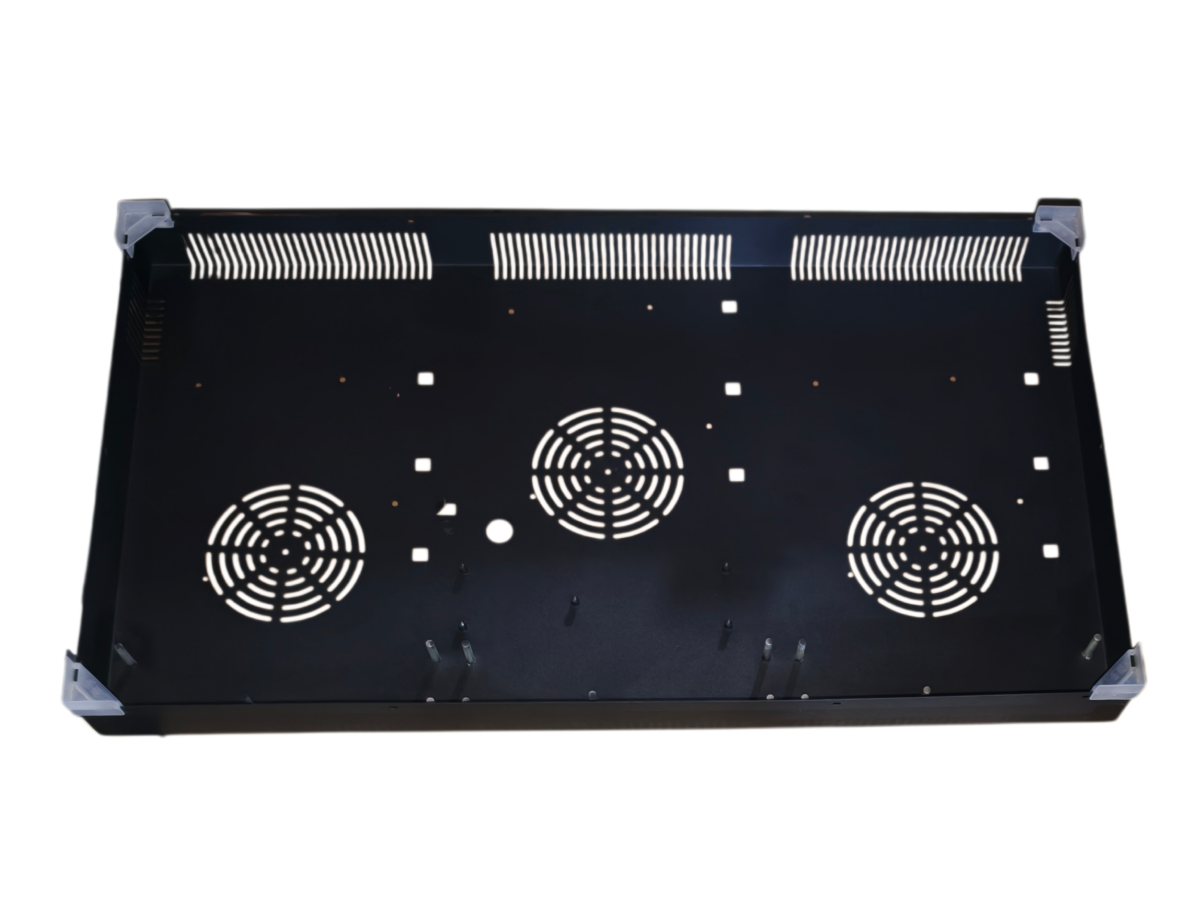
Sheet metal mass production fails when tooling, material batches, gauges or suppliers change quietly. Five things to lock into a repeat order.
The first article is the most misleading sample a buyer will ever receive. It is made with everyone watching, on a machine that was just set up, with a sheet that was just unwrapped, and it is measured with whatever instrument happens to be nearest. It is almost always good. The question that decides whether a production order succeeds is different: what will the five-thousandth piece look like, after the tool has cut ten thousand times, after three deliveries of material have been consumed, and after the part has passed through six pairs of hands that were never told what mattered. Sheet metal mass production does not fail because the process was wrong. It fails because something changed and nobody wrote it down.
The First Article Is Not Evidence About the Last One
A first article proves that the drawing can be met. It does not prove that it will keep being met, because a first article is produced under conditions that exist only once: tooling is fresh, the setup is new, the operator knows the job is being watched. Everything that later causes a reject — a tool that has worn, a coil from a different heat, a fixture that was swapped for a spare, a night shift that solved a problem in its own way — is absent from that sample by definition.
This is why a supplier that reports zero defects on the first article and a rising reject rate three months later is not necessarily lying in either case. Both numbers are true; they describe two different processes wearing the same part number. The useful question is not how good the first article was, but which variables are being held, and how anyone would know if one of them moved.
Tooling Wear Moves the Part Before Anyone Notices
Every forming operation degrades in a direction. A blanking or piercing edge dulls, and a dull edge does not simply cut worse — it tears instead of shears, which pushes the burr to the other side of the sheet, changes the effective hole size, and adds a step that used to be removed in the deburring operation and now is not. A press brake tool wears at the die shoulder, so the included angle drifts by a fraction of a degree, and a fraction of a degree at the bottom of a tall flange is a visible gap at the top.
None of this appears suddenly. It appears as a trend, and a trend is only visible to someone who is measuring the same feature the same way over time. That is what a tool maintenance record is for, and it is the first document worth asking for when a repeat order starts behaving differently: not whether the tool is maintained, but at what interval, against what wear limit, and who signs off that it was done. A press shop that can show the count since the last regrind is telling you something far more useful than a certificate.
A New Coil Is a New Process
Material is bought to a specification with a tolerance band, and that band is not a formality. Two sheets that both comply can sit at opposite ends of it in thickness, and can differ in yield strength because they came from different heats or were rolled and annealed on different schedules. The consequence is mechanical rather than chemical: a slightly stronger sheet springs back more, so the same bend command produces a slightly more open angle; a slightly thicker sheet changes the developed length, so a flange that was on nominal becomes a flange that is over.
This is the reason material traceability matters to consistency and not only to paperwork. If a batch of parts starts drifting and the material source changed in the same week, an afternoon of investigation is replaced by a week of it. Buyers usually specify the material grade and stop there; specifying that the source stays fixed for the life of the part is a different and much stronger instruction, and it costs nothing until someone tries to change it.
The Gauge Changed, So the Part Did
A measurement is a process too, and it drifts just as quietly. The first article is often checked on a coordinate measuring machine, on a surface plate, with the part clamped in a way that resembles how it will be used. Production is checked with a caliper, by hand, with the part resting on a bench. The two methods disagree — not by much, but consistently — and the disagreement is invisible because nobody records which method produced which number.
Then there is the fixture side of the same problem. A part that is flexible will read differently depending on whether it is measured free or restrained, and a part that is welded will read differently before and after the weld cools. If the inspection method is not written down and tied to a drawing dimension, an argument about a reject becomes an argument about whose caliper is right, which nobody wins. The practical fix is a checking fixture or a stated method agreed at first article and used unchanged afterwards — the same instrument, the same datum, the same clamping, the same person if possible.
Shift Changes Are Where the Recipe Gets Rewritten
Much of what makes a part come out right is not on the drawing: which way a bracket is loaded into the fixture, how much a welded corner is allowed to be tapped straight, which side of a painted panel faces out during handling. That knowledge is transferred by demonstration, and demonstration degrades. The day shift shows the night shift, the night shift trains a new hire, and within a few months a step that was deliberate has become optional, or has disappeared.
Shops that hold consistency over long runs solve this with the least glamorous tool available: a written setup and operation sheet at the workstation, with a photograph of the correct orientation and a note on what the previous operator got wrong. It is worth asking to see one during a supplier visit, because its existence tells you whether the process belongs to the company or to one experienced person who might resign.
Changes That Never Went Back to the Drawing
The most expensive drift is a deliberate improvement that was never documented. A subcontractor is changed because the old one was slow; a coating is swapped because the specified one had a lead time; a hole is added because assembly asked for it; a fold is moved a little because the tool was not available. Each decision is reasonable in isolation, and each one makes the delivered part differ from the drawing that the customer is still using as the reference.
Two years later nobody can reconstruct which version of the part is in the field. The defence is procedural and has to be agreed before it is needed: a written change-notification requirement, with a defined response time, and a rule that no substitution of material source, finishing supplier or process route happens without the buyer's written agreement. This is the point where the quality system stops being a certificate on a wall and becomes an operating habit — which is why the inspection points a repeat order depends on are the ones tied to change control, not the ones in the brochure.
What to Lock Into the Order So Nothing Drifts
Consistency is bought with specificity, and most of it fits in a single page attached to the purchase order. Five items carry most of the weight: the material source, fixed for the life of the part rather than named once; the inspection method, named per critical dimension, with the instrument and datum stated; the tooling maintenance interval and the record that proves it; a retained sample from the approved first article, kept by both sides; and a change-notification clause covering material, process and subcontractor.
Two more are worth adding where the part is safety-related or cosmetically critical: a re-qualification trigger, so that a tool refurbishment or a source change forces a fresh first article rather than an assumption, and a periodic capability review on the two or three dimensions that actually matter. It also helps to understand why the cheapest repeat quote is rarely the one that holds — why a repeat batch priced below the first usually is not is a question about what was quietly removed, and the answer is often maintenance or inspection. Buyers who would rather prevent the drift than audit it afterwards tend to ask these things early; the questions worth asking before the first drawing is sent cover much of the same ground from the supplier side.
Conclusion
Sheet metal mass production is not a longer version of making one part. It is a different problem, because the enemy is no longer the difficulty of the geometry but the slow movement of everything around it: tool wear, a new coil, a different instrument, a new shift, a substitute supplier. None of these shows up as a defect on the day it happens; all of them show up as an argument months later. The buyers who get consistent parts are the ones who fixed the variables in writing while the first article was still on the bench.
Frequently Asked Questions
Why can a part pass the first article and still fail in production?
Because the first article is made under conditions that exist once: fresh tooling, a new setup, and an operator who knows the job is being inspected. Production introduces tool wear, new material batches, different measuring methods and different shifts, and any of those can move the part without producing a single obvious defect.
Does changing material supplier really affect a sheet metal part?
Yes, if the new sheet sits at a different point in the allowed thickness and strength range. A stronger sheet springs back more, so bend angles open; a thicker sheet changes the developed length, so flanges drift. Both can be within specification and still shift the assembled result.
Should repeat orders be inspected the same way as the first article?
The method should be the same, even if the frequency is lower. Switching from a measuring machine and a checking fixture to a caliper on a bench introduces a disagreement that looks like a quality problem but is really a measurement change.
What is the single most useful clause to add to a production order?
A change-notification requirement covering material source, process route and subcontractors, with an agreed response time. Most drift enters through a reasonable local decision that was never reported, and a notification clause is what turns that decision back into a conversation.
If the part is moving into repeat production, send the drawing and the annual volume — we will tell you which features we would hold, how we would measure them, and what we would need locked down to keep them there.
