.png?imageMogr2/format/webp)
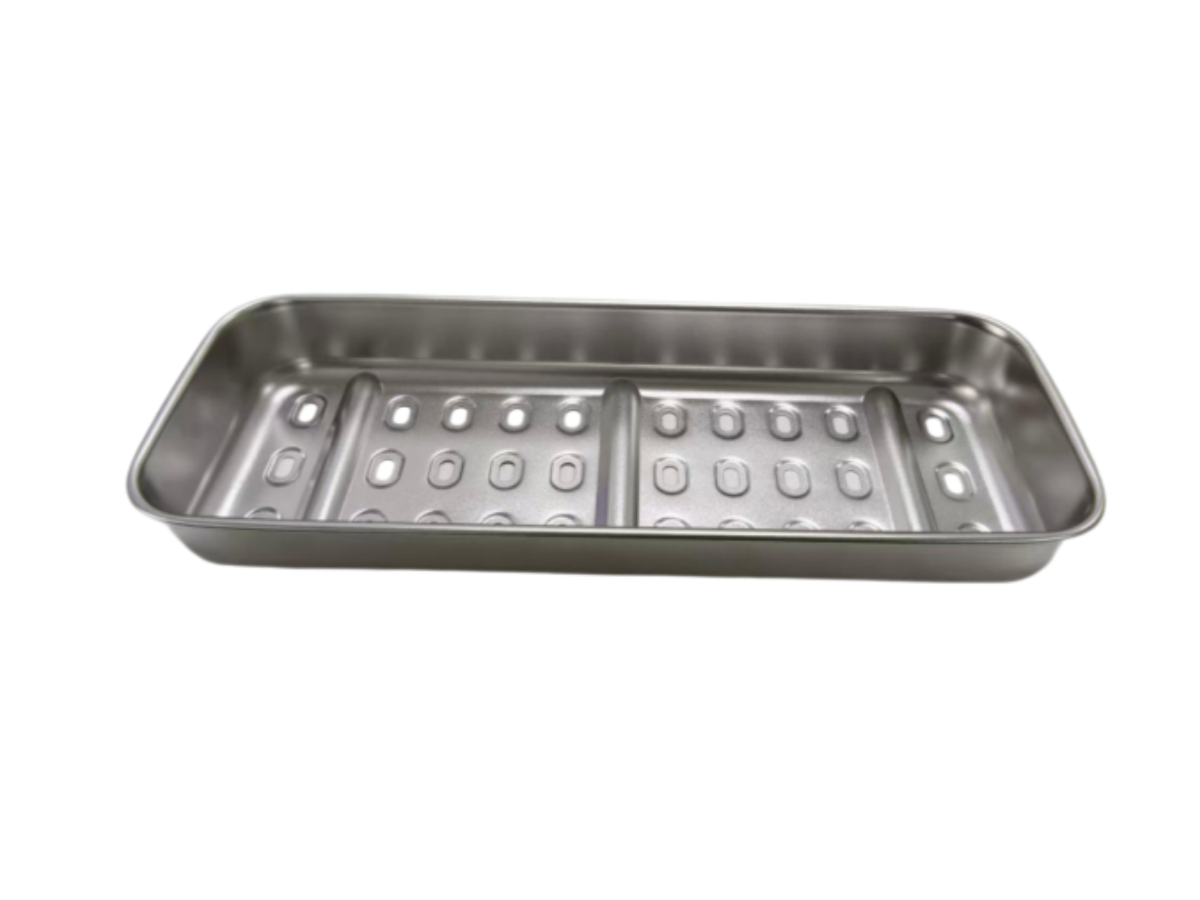
Hygienic stainless steel fabrication is decided by drainage, reach and crevices, not by polish. What to put on the drawing so the part can be washed.
Hygienic stainless steel fabrication is usually specified by a finish callout — a grit number, a mirror polish, an electropolished note — as though cleanliness were a property of the surface. It is not. A part can be mirror-bright and still fail a swab test, because a lap joint behind the polished face holds product, or because a horizontal flange has nowhere to drain. The three properties that actually decide hygienic performance are geometric, and all three are fixed on the drawing: whether the cleaning medium can reach every surface, whether liquid leaves the part, and whether any gap exists for residue to sit in.
Cleanability Is Geometry Before It Is Surface
Food and pharmaceutical equipment is cleaned in three ways: flooded or sprayed with a cleaning solution, wiped by hand, or flushed with water at changeover. Each puts a different demand on the part — a spray needs line of sight, a wipe needs a tool to physically reach the surface, a flush needs gravity to do the work — but all three collapse into the same three questions, and they can be asked of any sheet metal part before it is built.
Can it be seen? Can it be reached? Can it be emptied? A surface that fails any one of these cannot be rescued by a better finish, because the contaminant is not on the surface being polished — it is in a place the polish never went. This is the mistake we see most often in incoming drawings: a finish specification carrying the whole hygiene argument, while the geometry underneath it creates a pocket the customer has never looked at. The design decisions that make a part reachable in the first place are usually made long before anyone discusses polish, and they are the same ones that fix how a fabricated part fits, costs and assembles.
The First Real Test Is Drainage, Not Cleanliness
Liquid that stays on a part after washing is worse than liquid that never arrived, because it carries whatever the wash loosened into a place where it can sit and grow. Every horizontal surface is therefore a design decision, not a neutral feature: a cover, a top flange, the upper face of a stiffener, the bottom return of a door frame. Each one either drains, or holds.
A formed edge is the most common offender, and it is rarely noticed because it is added for stiffness rather than for hygiene. An upturned lip on a panel gives the part rigidity and gives the plant a trough a few millimetres deep, running the length of the part, out of sight and impossible to drain. Turning the same lip downward, or replacing it with a formed bead, keeps the stiffness and removes the reservoir. Drain holes work only when they are placed at the true low point of the geometry and lead somewhere that also drains — a hole that empties into the next pocket has moved the problem rather than solved it.
Crevices Are Designed In Before Anyone Lifts a Torch
It is tempting to treat crevices as a welding problem. Most of them are not. They come from the way two pieces of metal are joined: a lap joint, a bolted sandwich with a gasket between the plates, a hemmed edge, a stiffener spot-welded to a face. Wherever two surfaces touch along a line rather than being fused along it, a capillary gap exists that no cleaning fluid reliably penetrates and no inspection reliably sees.
The strongest fix is to remove the joint rather than seal it. A bracket that is folded out of the parent panel eliminates a connection that a welded-on bracket would have created; a butt joint between two flanges eliminates the overlap a lap joint depends on. Where a joint has to stay, the choice is between a full-penetration weld and a gap, and there is not much middle ground. The other crevice nobody draws is the inside corner. A tight internal radius slows the cleaning flow exactly where residue collects, so a slightly larger radius is more hygienic even though it looks less precise — and it changes the tooling, the flat pattern and the bend sequence, which is why it belongs in the conversation at quoting stage rather than on the shop floor.
A Stitch Weld and a Continuous Weld Are Different Products
Structurally, a stitch weld and a continuous weld often do the same job. Hygienically they do not. A stitch weld leaves the interface between the two parts unwelded along most of its length, which is a crevice by another name: closed to the eye, closed to the cleaning fluid, open to whatever wicks into it. The failure shows up months later as corrosion tracking along a seam that looked sound at goods-in.
The reverse mistake is just as common: specifying full welds everywhere because welds are assumed to be the safe answer. Continuous welding puts far more heat into the part, which pulls it out of flat, which then needs straightening, which then disturbs the surface. So the decision is not "weld more" but "weld continuously where the seam is product-contact, washable or capable of holding liquid, and stitch elsewhere". Written that way, the note is buildable and the cost is visible; written as a blanket instruction, it either overbuilds the part or leaves the critical seam to habit.
Post-Weld Treatment Belongs to the Joint, Not to the Cosmetics
Welding destroys the passive layer that makes stainless steel stainless, and it does so in two ways: it leaves an oxide tint on and around the bead, and it draws chromium out of the metal immediately beside the weld, leaving a narrow band that is less resistant than the parent plate. That band is where pitting starts, and it is invisible. Treating the weld as a cosmetic operation — grinding it flat so the part photographs well — misses both problems.
The order matters more than the effort. Mechanical work comes first: remove spatter, blend the toe of the weld, take down excess reinforcement so nothing can sit on it. Cleaning follows. Then pickling or passivation restores the surface chemistry, and a final rinse removes the residue the treatment itself leaves behind. Doing passivation before grinding simply polishes the problem away along with the protection. There is a second, quieter rule: tools used on stainless have to be dedicated to stainless. Iron picked up from a carbon steel wire brush or grinding disc embeds in the surface and rusts there, on a part that was never at fault.
Surface Finish Has a Direction, and the Direction Should Be Written Down
Mechanical polishing leaves a grain, and a grain has a direction. Two surfaces finished to the same roughness behave differently if one is polished along the direction of flow and the other across it, because a scratch pattern perpendicular to the flow traps a thin film that a parallel pattern releases. When a drawing says "polished" and nothing else, the shop finishes each face in whatever direction the part is easiest to hold, and the result is a part with a consistent number and an inconsistent surface.
It is also worth separating two processes that are often spoken of as if one replaced the other. Mechanical polishing changes the geometry of the surface: it cuts the peaks down. Electropolishing works chemically, preferentially dissolving the microscopic high points and leaving a chromium-enriched layer behind, which improves the passive film as well as the profile. Pharmaceutical and medical work tends toward the electrochemical route, food equipment more often toward mechanical finishing plus passivation, and neither is a substitute for the other. What matters at the drawing stage is that the face, the process, the grain direction and the treatment after it are all named — otherwise the finish is a matter of workshop preference.
The Grade Answers a Corrosion Question, Not a Hygiene Question
Material selection is often treated as the hygiene decision, and it is not. What the grade decides is how the part behaves in the cleaning chemistry and the product environment: whether it resists pitting under a chloride-bearing detergent, whether it survives a caustic wash cycle, whether it discolours in a salt-laden product. The austenitic grades with molybdenum and those without are compared for exactly this reason, and the difference shows up first in crevices, under deposits, and at weld toes — the same places hygiene already fails.
That is why the cleaning regime and the material have to be chosen together rather than in sequence. A plant that selects a grade against the product, then hands the cleaning chemicals to a contractor who picks a chlorine-based sanitiser, has created a corrosion problem in a place that is also a hygiene problem. Asking for the wash chemistry at quoting stage is not an unusual request; it is the input that makes the material recommendation mean anything.
What the Drawing Has to Say for the Part to Come Out Cleanable
A workshop builds what the drawing asks for, and where the drawing is silent it builds what is quickest. That is not a criticism; it is the reason hygiene requirements have to be written rather than implied. Six notes cover most of it: which seams are welded continuously and which may be stitched; the minimum internal radius at corners that will be cleaned; the drain direction and the low point where a hole belongs; the face, process, grain direction and post-treatment for each finished surface; the constructions that are not permitted, such as lap joints, closed cavities and upturned lips; and how each of these will be verified.
It also helps to know what the route does to the seam before the drawing is frozen, since the choice between cutting, forming and welding changes how many joints exist in the first place — how that route is chosen between cutting, stamping and bending is worth settling before the hygiene notes are added, not after. And because every one of these notes costs time, consumables and inspection, a quote that ignores them is not a cheaper quote; it is a quote for a different part. The parts that leave a workshop cleanable are the ones where these points were checked against the checks a part passes before it ships, rather than discovered at the customer's washdown.
Conclusion
Hygienic stainless steel fabrication is decided by three things that have nothing to do with how shiny a part looks: whether liquid can leave it, whether a cleaner can reach every surface, and whether any unwelded gap exists. Drainage is a forming decision, reach is a radius and access decision, and crevices are a joint decision — and all three are cheaper to change on a drawing than on a finished weld. The finish still matters, but it matters last: it decides how well a surface that was already cleanable behaves over a thousand wash cycles, not whether it can be cleaned at all.
Frequently Asked Questions
Does a higher polish make a stainless part more hygienic?
Only after the geometry allows cleaning to happen at all. A mirror finish on a surface that a cloth cannot reach, or above a pocket that holds liquid, changes nothing about residue. Finish controls how a cleanable surface ages; drainage, access and the absence of gaps decide whether it can be cleaned.
Why specify a continuous weld instead of a stitch weld on a product-contact part?
Because a stitch weld leaves the interface between the two parts unwelded along most of its length, which is a crevice that cleaning fluid cannot enter and inspection cannot see. Continuous welding is not automatically better everywhere, though: it adds heat, distortion and finishing work, so it belongs on the seams that are washed or hold liquid.
Can a fabricated part be made hygienic after it has been built?
Partly. Weld toes can be blended, oxide tint removed and the passive layer restored, which fixes the surface chemistry. What cannot be fixed afterwards is the geometry: a lap joint, a closed cavity or an upturned lip that holds liquid are built into the part. Those have to be designed out before fabrication.
What should a drawing say that a general finish callout does not?
Which seams are continuous and which may be stitched, the minimum internal radius at cleaned corners, the drain direction and low point, the face and grain direction for each finished surface, and the constructions that are not allowed. Naming the wash chemistry alongside the grade also helps, because material and cleaning regime have to be chosen together.
Send the drawing or the cleaning regime your equipment has to survive, and we will flag the joints, radii and drain points that decide whether the part can actually be washed.
